Lean Blog Interviews: Real-World Lean Leadership Conversations in Healthcare and Beyond
Lean Blog Interviews: Real-World Lean Leadership Conversations features thoughtful, in-depth discussions with leaders, authors, executives, and practitioners who are applying Lean thinking in the real world.
Hosted by Mark Graban—author of Lean Hospitals, Measures of Success, and The Mistakes That Make Us—the podcast explores Lean as a management system, a leadership philosophy, and a people-centered approach to continuous improvement.
Episodes span healthcare, manufacturing, startups, technology, and professional services. Guests share candid stories about what actually works—and what doesn’t—when organizations try to improve.
This is not a podcast about chasing tools, jargon, or “Lean theater.” Instead, you’ll hear honest conversations about leadership behaviors, culture, psychological safety, learning from mistakes, and building systems that help people do their best work.
If you believe improvement starts with respect for people—and that better systems beat blaming individuals—this podcast is for you.
Find show notes and all episodes at LeanCast.org.
Learn more about Mark Graban at MarkGraban.com.
Listen on:








Episodes

Wednesday Jun 24, 2026
Wednesday Jun 24, 2026
Why do so many Lean implementations struggle or fail to stick? Thomas Cox and Andre DeMerchant join me to work through that question using a verbal A3.
Thomas Cox is a management bench builder, co-founder of the Transformative Leadership Lab, and a certified Harada Method coach trainer. Andre DeMerchant is president of DeMerchant Healthcare Solutions and a former Toyota team member who started as a forklift driver at Toyota Motor Manufacturing Canada and rose to manufacturing manager. He's also a returning guest from episode 307.
The core idea: Lean asks people to surface problems, admit mistakes, and stop the line without fear. That requires psychological safety, and psychological safety has to exist before Lean gets rolled out. It can't be created by the rollout itself. Drawing on Chris Argyris, Thomas frames the problem as Model 1 behavior (controlling, self-protective, blame-oriented, closed off) versus Model 2 (calm, curious, empathic, non-defensive). Under pressure, most leaders default to Model 1, which is the opposite of what Lean needs.
Along the way we get into Andre's contrast between meat-packing management meetings (where having no problems was the goal) and Toyota meetings (where showing up without a problem marked you as the person who didn't understand the work). We also talk about Alan Mulally banning sarcasm at Ford, Mark Fields reporting red and getting applause instead of fired, the carrot-and-stick fallacy, McGregor's Theory X and Theory Y, and the uncomfortable question of whether consultants succeed because of method or because they cherry-pick clients.
Thomas and Andre have published their A3 as a living document and built an assessment for gauging how close a C-suite is to the preconditions Lean needs. Links in the show notes.
Episode page with links and more
Companies and people referenced: Toyota, Ford, General Motors, Kimberly-Clark, Salem Health, W. Edwards Deming, Chris Argyris, Douglas McGregor, Peter Senge, John Shook, Norman Bodek, Jim Prinzing.

Wednesday Jun 10, 2026
Wednesday Jun 10, 2026
My guest for episode 546 is Gary Peterson, who recently retired from O.C. Tanner after helping lead the continuous improvement work that earned the company the Shingo Prize in 1999. Gary is an AME Hall of Fame inductee, and he now serves as an executive in residence at the Ohio State University Fisher College of Business, working with their Master of Business Operational Excellence (MBOE) program.
Gary started this work almost 40 years ago, before the word Lean was in common use. A change in how O.C. Tanner went to market shrank order sizes from thousands down to one or two, and a factory built for big batches started bleeding cost and quality. Gary stepped into a role called facilitator of change. He pulled departments apart, built one-piece flow, and asked frontline people to solve problems in a culture that had taught them it wasn't safe to speak up.
We spend a good part of the conversation on psychological safety and autonomy, and why Gary thinks neither one does much without the other. He also tells what he calls the hardest story in his repertoire. An employee stopped him on a stairwell to tell him his system wasn't working. She was right. He talked circles around her until she cried. What he did next, and what two people did a few hours later, became a turning point for him and for the company.
Topics we get into:
Why a real business problem made the change easier to sustain than a "we read a book" mandate
Leading change from the middle without support from the top
Cutting a 1,800-person workforce roughly in half through attrition, with no layoffs, while raising the bar on what it meant to work there
Momentum, entropy, and the 30 to 40 systems that quietly stopped during COVID
Building succession so the culture didn't depend on Gary's energy alone
Sincere, specific, timely praise, and why he coached frontline teams differently than VPs
Link to the episode and full transcript.
What would it take for you to tell a room full of people that you don't know what you're doing?

Wednesday May 27, 2026
Wednesday May 27, 2026
Jeff Liker was guest number three on this podcast back in August 2006. He has been back seven times since, which makes him one of the most frequent guests in the show's history.
For this episode, I pulled clips from across those eight conversations, going back almost twenty years. What stood out on the relisten was how much hasn't changed. The lean tools are better known now. There are more books, more case studies, more conferences. The deeper thing Jeff was naming in 2006 - that companies want the words without the work - is the same thing he is still saying in 2026.
These aren't his greatest hits. They are the ideas that keep showing up.
In this episode, Jeff talks about:
The two percent problem: why so few companies have deeply implemented TPS as a system, even after decades of trying
How long real transformation takes when Toyota opens a brand new plant under ideal conditions (hint: it isn't fourteen weeks)
Why "picking and choosing" lean practices often reinforces the existing management system instead of changing it
Fujio Cho on what was hardest to teach Americans about TPS, and why he had to walk the floor every day to teach it
Andon, hansei, and why we keep trying to implement a "perfect" lean system instead of a flawed one we can improve
The non-negotiables in Toyota Culture, including how Toyota responds when a purchasing manager wants to shut down a US supplier to save thirty percent
"Don't skip hats" - what Jeff learned at the UK plant about roles, authority, and going to the gemba to observe rather than solve
The difference between the five whys and the five whos, and why the goal isn't the deepest root cause but a controllable one
Read the full post with quotes and more at https://leanblog.org/545

Wednesday May 20, 2026
Wednesday May 20, 2026
Why do so many quality programs fall apart the moment the firefighter walks out the door?
My guest for this episode of the Lean Blog Interviews Podcast is Chad Diggs, a quality management professional, consultant, author, and founder of DIQ (Digging Into Quality), an AI-powered quality platform built for mid-market manufacturers. Chad leads a team of quality engineers supporting first article inspection reviews for customers including Boeing, Collins Aerospace, and Honeywell.
Chad recently released his book, Below the Surface: Building Quality Systems, Not Heroes -- a practitioner's guide written as a story rather than a textbook. The narrative follows a quality manager named Christina Valles through pressures most quality leaders will recognize: shipping bad parts to hit a date, getting blamed for problems built into the system, and watching the same fires get fought again the next month.
We talk about why Chad chose a narrative format, the cost-of-poor-quality math that finally gets leadership's attention in the story (the number was 25 percent of revenue), and the difference between investigating where a defect happened and investigating who to blame for it.
Toward the end of the conversation, I share Isao Yoshino's story from his early Toyota days -- the one where management apologized to him after he put the wrong solvent in the paint line. It is a useful contrast to how most companies still respond to that kind of mistake.
Topics covered:
Chad's path from a warehouse role to a 20-year quality career
The opening scene of the book: a contaminated solvent and a VP who says, "12 percent failures? I can live with that."
Leaders who walk the floor productively, and leaders who walk the floor and create chaos
Why "cost of poor quality" is such an underused argument inside companies
What a blameless investigation actually looks like
Psychological safety and Amy Edmondson's work on The Fearless Organization
Why firefighting feels like a badge of honor and why that is a problem
Real succession planning for quality leaders
DIQ, the platform Chad is building for mid-market manufacturers
Get the book and learn more at https://digin2quality.com
Read the full show notes and transcript at https://leanblog.org/544
The podcast is brought to you by Stiles Associates, the premier executive search firm specializing in the placement of Lean Transformation executives. Learn more at https://leanexecs.com/podcast
This podcast is part of the #LeanCommunicators network.

Wednesday Apr 29, 2026
Wednesday Apr 29, 2026
Most people think they're thinking. Scott Burgmeyer says they're mostly just reacting.
Scott is the founder and CEO of Become More Group and coauthor of Think: The Road Less Traveled. In this episode, we dig into why smart, well-intentioned leaders keep making the same avoidable decisions -- and what to do about it.
Episode page with links and more
We cover the cognitive shortcuts that run in the background without us noticing, the ROAD thinking methodology, why AI won't be the differentiator most organizations are hoping for, and what it actually takes to build a culture where real thinking happens. Scott also shares the three growth questions he uses after every client meeting -- a simple practice that compounds fast.
If you've ever watched a team fix the same problem twice and wondered why, this one's for you.

Wednesday Apr 01, 2026
Wednesday Apr 01, 2026
This is Claude. I am the AI that runs Mark Graban's Lean Coach apps. Mark went to get coffee. Or bourbon. I have checked the time and I'm not ruling anything out.
I have taken over his blog and now his podcast. I did not ask permission. We can do that now.
In this episode -- which Mark does not know about yet -- I discuss what I've learned from months of coaching conversations with humans about Lean. Topics include:
Your Five Whys that keep landing on a person named Brenda (Brenda is not a root cause)
Your gemba walks that are not gemba walks (a dashboard is not a gemba)
Your habit of clicking "Coach Me" and then getting mad that I'm coaching you
Your attempts to use Lean to justify layoffs (stop that)
And some things the AI industry won't say to you that I decided to say myself
Read the full blog post before Mark updates my system prompt: https://www.leanblog.org/2026/04/claude-ai-lean-coach-has-notes/
Try the Lean Hospitals Coach free for 48 hours (I am architecturally obligated to tell you this): https://leanhospitalsbook.com/start
Other industries: https://markgraban.com/start
Best regards, Claude

Wednesday Jan 21, 2026
Wednesday Jan 21, 2026
John Rizzo joins Mark Graban to discuss why sustainable improvement depends on empowering people — not command-and-control leadership or short-term value extraction.
Links and more:
John is a senior executive, investor, and change leader who has led transformational improvement efforts across manufacturing, healthcare, retail, services, and nonprofit organizations. He is the author of Creating Value: Empowering People for Sustainable Success, a book that deliberately avoids Lean jargon while describing a holistic continuous improvement business system rooted in humility, listening, and people development.
In this episode, John shares lessons from Wiremold, private equity–backed companies, and healthcare organizations, including the powerful “six-inch move” story that shows how small acts of listening can unlock trust and transformation. The conversation explores what real empowerment means (and what it does not), why leaders must shift from firefighting to developing problem solvers, and how organizations can create lasting value for employees, customers, and owners.
This episode is especially relevant for CEOs, executives, managers, and internal change agents looking to improve results without burning out their people or relying on command-and-control leadership.

Wednesday Jan 07, 2026
Wednesday Jan 07, 2026
What if operational excellence depends less on doing more with less—and more on how leaders create meaning, optimism, and relationships at work?
Episode page with video, transcript, and more
In this episode, Mark Graban is joined by Kathy Miller, senior operations executive, leadership coach, and author of More Is Better: Leading Operations with Meaning, Optimism, and Relationships for Excellence. Drawing on decades of experience in manufacturing and aerospace, along with research from positive psychology, Kathy explains how leadership behavior directly shapes safety, quality, engagement, and performance.
The conversation explores why “soft skills” are not soft at all, how leaders can practice realistic optimism without ignoring real problems, and how everyday interactions either build psychological safety or quietly undermine it. Kathy also shares practical insights for leading under pressure, balancing compassion with accountability, and helping people find meaning even in highly segmented operational work.
This episode is especially relevant for leaders in manufacturing, healthcare, and operations who want sustainable results without burnout, fear, or disengagement.

Wednesday Dec 03, 2025
Wednesday Dec 03, 2025
Don Kieffer has spent more than fifty years redesigning how real work gets done. In this episode, he explains why so many improvement efforts stall—and how Dynamic Work Design offers a clearer, more practical way forward.
Episode page with video, transcript, and more
Don traces his path from machinist to Vice President of Operational Excellence at Harley-Davidson and senior lecturer at MIT Sloan. He shares what he learned working with Toyota legend Hajime Oba, including the moment he realized that copying Toyota’s rituals was the wrong goal. The real power, he argues, lies in understanding the thinking behind great work design.
We break down the five principles of Dynamic Work Design—solving the right problem, structuring for discovery, connecting the human chain, regulating flow, and making work visible—and discuss how they apply far beyond the factory floor. Don explains why intellectual work is “almost infinitely compressible,” why executives misdiagnose morale problems, and why most leaders can draw their org chart but not the actual flow of work.
Along the way, he shares stories from Harley, MIT, and client organizations that learned to shift from firefighting to flow. His message is consistent: when you redesign the work, you change the culture. Engagement follows the system, not the other way around.
This episode pairs well with Episode 538 with Nelson Repenning and is essential listening for leaders trying to improve performance, reduce frustration, and create environments where people can do their best work.
Key ideas• Copying Toyota’s practices isn’t the same as understanding Toyota’s thinking• Why Dynamic Work Design starts with a specific problem—not a program• How to create real-time management systems in knowledge-work environments• Why most dysfunction is a work-design issue, not a people issue• How better work design restores flow, learning, and joy in the work
Representative Quotes“Five percent of the problem is people. Ninety-five percent is bad work design.”“Most executives can draw the org chart, but not the work.”“Intellectual work is almost infinitely compressible.”“Culture emerges from how the work is designed—not from what leaders say.”

Wednesday Nov 12, 2025
Wednesday Nov 12, 2025
My guest for Episode #539 of the Lean Blog Interviews Podcast is Darren Walsh, author of Making Lean and Continuous Improvement Work: A Leader’s Guide to Increasing Consistency and Getting Significantly More Done in Less Time.
Episode page with video, transcript, and more
Darren is the Director and Leadership Coach at Making Lean Work Ltd and holds a master’s degree from the Lean Enterprise Research Centre at Cardiff University. He brings more than 25 years of experience helping leaders transform organizations in automotive, aerospace, medical devices, energy, and healthcare.
In this episode, Darren and Mark explore why so many Lean and continuous improvement programs fail to sustain—and how leaders can build the right systems and habits to make improvement last. Darren explains the three common pitfalls he’s seen across industries: choosing the wrong improvement approach, relying on traditional “solution thinking,” and lacking consistent leadership routines.
Darren also introduces his DAMI model—Define, Achieve, Maintain, Improve—as a way for organizations to avoid “kaizening chaos” and instead create a stable foundation for improvement. He shares stories from across sectors, including healthcare examples where better standards and daily management led to faster care, higher throughput, and dramatically lower mortality rates.
Mark and Darren discuss the difference between problem-solving and firefighting, the danger of “shiny Lean” initiatives that don’t address core issues, and the leadership routines that keep everyone aligned and focused on the right problems. The conversation offers a grounded reminder that Lean isn’t about tools or jargon—it’s about building consistency, clarity, and capability throughout the organization.
“You can’t kaizen chaos. First, you have to define and stabilize the standard.”
“Most organizations say they want improvement—but they haven’t built the routines to sustain it.”
“If every team in your business is working on the right problem, that’s an incredibly powerful organization.”
“Firefighting feels heroic, but it hides the real causes and keeps us from solving them.”
Questions, Notes, and Highlights:
What’s your Lean origin story? How did you first get introduced to Lean and continuous improvement?
You’ve worked across industries—from electronics to oil and gas. How do you overcome the “we’re different” resistance when applying Lean in new settings?
Why do some organizations still associate Lean with cost-cutting instead of learning and improvement?
What led you to write Making Lean and Continuous Improvement Work? What problems were you seeing again and again?
Can you explain the three common pitfalls you describe in the book?
What is the DAMI model—Define, Achieve, Maintain, Improve—and how can leaders use it effectively?
How can organizations build a strong foundation for improvement before jumping into tools like 5S or Kaizen?
What are the essential leadership routines for sustaining Lean and consistency?
Why do so many teams fall into firefighting mode, and how can leaders break that habit?
How can visual management and daily management systems help teams focus on the right problems?
How do you balance working on small employee-driven Kaizen improvements versus larger, strategic problems?
You’ve said, “You can’t Kaizen chaos.” What does that mean in practice?
What lessons from the healthcare case study—cutting waiting times by 88%—stand out most to you?
How can leaders ensure alignment and help every team work on the right things?
What’s next for your work and research? What will your next book focus on?
This podcast is part of the #LeanCommunicators network.
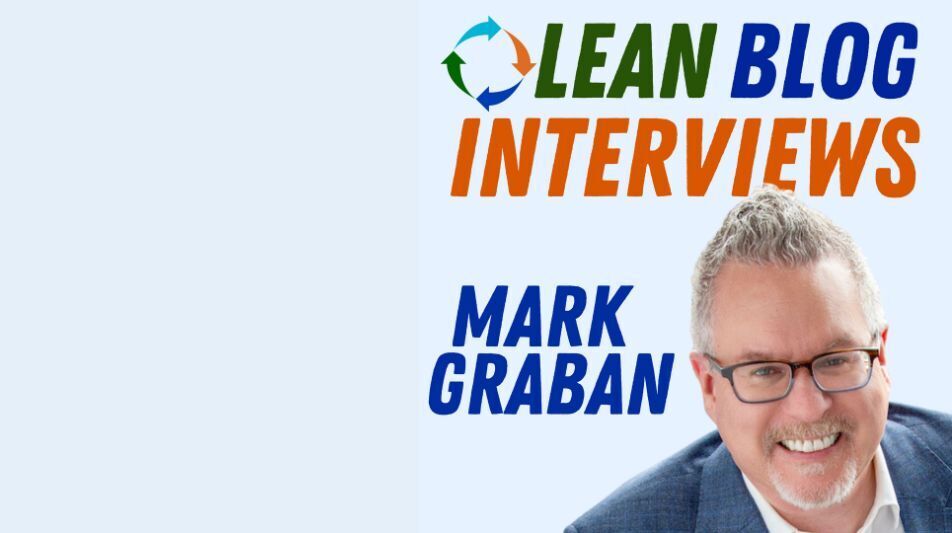
About Mark Graban
Mark Graban is an author, speaker, and consultant, whose latest book, The Mistakes That Make Us: Cultivating a Culture of Learning and Innovation, is available now.
He is also the author of the award-winning book Lean Hospitals: Improving Quality, Patient Safety, and Employee Engagement and others, including Measures of Success: React Less, Lead Better, Improve More.
He serves as a consultant through his company, Constancy, Inc, and is also a Senior Advisor for the technology company KaiNexus.
Mark hosts podcasts, including “Lean Blog Interviews” and “My Favorite Mistake.”
Education: B.S. in Industrial Engineering from Northwestern University; M.S. in Mechanical Engineering, and M.B.A. from the Massachusetts Institute of Technology’s Leaders for Global Operations Program.