Lean Blog Interviews: Real-World Lean Leadership Conversations in Healthcare and Beyond
Lean Blog Interviews: Real-World Lean Leadership Conversations features thoughtful, in-depth discussions with leaders, authors, executives, and practitioners who are applying Lean thinking in the real world.
Hosted by Mark Graban—author of Lean Hospitals, Measures of Success, and The Mistakes That Make Us—the podcast explores Lean as a management system, a leadership philosophy, and a people-centered approach to continuous improvement.
Episodes span healthcare, manufacturing, startups, technology, and professional services. Guests share candid stories about what actually works—and what doesn’t—when organizations try to improve.
This is not a podcast about chasing tools, jargon, or “Lean theater.” Instead, you’ll hear honest conversations about leadership behaviors, culture, psychological safety, learning from mistakes, and building systems that help people do their best work.
If you believe improvement starts with respect for people—and that better systems beat blaming individuals—this podcast is for you.
Find show notes and all episodes at LeanCast.org.
Learn more about Mark Graban at MarkGraban.com.
Listen on:








Episodes

Wednesday May 27, 2020
Wednesday May 27, 2020
http://www.leanblog.org/372
My guest for Episode #372 is Karen Gaudet, author of the excellent book Steady Work, which was published by the Lean Enterprise Institute.
In the interest of full disclosure, I am a former employee of LEI and they provided a review copy of the book.
In today's episode, we discuss her experience with Lean at Starbucks. It's a fascinating story that includes a transition from the old way (the Seattle HQ figuring out "best practices") to a new way (where store managers and baristas were taught how to design "playbooks" and to continuously improve the way the work is done in a particular store).
Sunday May 17, 2020
Sunday May 17, 2020
http://www.leanblog.org/371
For Episode #371, we bring the discussion back to Lean Manufacturing applications, as our guest is Marc Lushington-Murray. He currently lives in the Fort Worth, Texas area but, as you'll discover from his accent, he was originally born and raised in England.
Marc is currently searching for a new opportunity, but he brings a great deal of experience from his time working for Nissan and then Parker Hannifan. He was originally self-taught but then had the opportunity to learn from the famed Shigijitsu consulting group and others.
He has worked in internal Lean roles, but has always been pulled into plant management or other direct line management roles. I hope you'll enjoy the conversation as Marc shares his reflections on his career to date and his hopes for what is still yet to come.
Tuesday May 12, 2020
Tuesday May 12, 2020
http://www.leanblog.org/370
Joining me for Episode #370 is Edward Blackman, the founder and managing partner of Kelda Consulting. He has previously had Lean and process improvement-focused roles at organizations as varied as Whirlpool, Amway, and Spectrum Health.
Today, we are discussing behavioral science and the need to combine practices and lessons from that field with Lean and continuous improvement.
Edward earned a Masters degree in Behavioral Science, along with undergraduate degrees in Psychology and Mathematics. He is a certified Six Sigma Black Belt by the American Society for Quality; is certified in Labor Standards by HB Maynard; is a Lean (Toyota Production System) Instructor/Coach; a Kata Coach; a certified Scrum Master; and an Agile Coach. Read his full bio.
Thursday May 07, 2020
Thursday May 07, 2020
http://www.leanblog.org/369
Joining me again for Episode #369 of the podcast is Dr. Rachel Mandel, a self-described "healthcare whisperer" and Washington D.C.-based consultant for healthcare organizations. She has her own practice and also works as a Senior Healthcare Advisor for Operational Performance Solutions, Inc.
She was a guest recently for Episode #367, but we had recorded that before the pandemic. So, we decided to do another episode, this time as a live YouTube stream, to talk about issues of the moment, and the future, related to Lean and Covid-19 -- leadership, respect, and safety among other themes.
Again, she is a physician (OB-GYN) and previously served as the Vice President of Medical Affairs for a health system in Maryland. Read her full bio here.
Sunday May 03, 2020
Sunday May 03, 2020
http://leanblog.org/368
My guest for Episode #368 is somebody I've met fairly recently through his excellent posts on LinkedIn, Steve Feltovich.
He is the president of SJF Consulting, Inc. and he previously had a long career in the automotive industry, in particular collision and repair.
Steve learned about Dr. Deming's approach and also learned the Toyota Production System from Toyota and Toyota University, so he has an interesting perspective that I really appreciate.
I hope you enjoy the discussion!
Monday Apr 27, 2020
Monday Apr 27, 2020
http://www.leanblog.org/367
Joining me for Episode #367 of the podcast is Dr. Rachel Mandel, a self-described "healthcare whisperer" and Washington D.C.-based consultant for healthcare organizations. She has her own practice and also works as a Senior Healthcare Advisor for Operational Performance Solutions, Inc.
She is, of course, a physician (OB-GYN) and previously served as the Vice President of Medical Affairs for a health system in Maryland. Read her full bio here.
We recorded this podcast in late February 2020, so much has changed since then. We'll be doing a follow up podcast next week where we'll discuss some of the leadership (and organizational) challenges that health systems face now during the Covid-19 pandemic.
Today, we'll talk about her experiences with Lean and how she is an advocate for this methodology, especially around the important issues of safety and quality.
Sunday Apr 19, 2020
Sunday Apr 19, 2020
http://www.leanblog.org/366
My guest for Episode #366 is Harry Moser, founder of the Reshoring Initiative. We talk about “reshoring,” in general, and why that's such an important issue in the context of the Covid-19 pandemic and beyond.
Harry definitely falls into the category of guests where I wonder, “Why haven't I had this person on the show before?” Harry and his work have been on my radar for a long time. I appreciate the mission and I wish more companies would consider the “Total Cost” (and old Dr. Deming concept) when making manufacturing site location and sourcing decisions instead of focusing only on “unit cost” or “landed cost” (which includes freight and taxes).
“The mission of the Reshoring Initiative® is to bring good, well-paying manufacturing jobs back to the United States by assisting companies to more accurately assess their total cost of offshoring, and shift collective thinking from offshoring is cheaper to local reduces the total cost of ownership. “
Harry was inducted into the Industry Week Manufacturing Hall of Fame in 2010, based on his long career in manufacturing. He founded the Reshoring Initiative in 2010. Be sure to check out the TCO Estimator tool that he discusses in the episode.
“Most companies make sourcing decisions based solely on price, oftentimes resulting in a 20 to 30 percent miscalculation of actual offshoring costs.”
The Reshoring Initiative Website
Harry's LinkedIn Profile
@HarryMoser on Twitter
@ReshoreNow on Twitter
The Total Cost of Ownership Estimator
Listeners have probably heard of “offshoring” but what is “reshoring”?
Why “reshoring”?
What is “nearshoring” and is that nearly as good?
Tell us about the history of your organization, the Reshoring Initiative…
Why should our current Covid-19 crisis be a “wake up call” about where goods are manufactured?
Do you think it's fair when analysts or the media blame “just in time” for shortages of goods and equipment during this crisis (in healthcare or retail)? Why or why not?
Can Lean take out enough waste to make a high-labor manufacturing site competitive with U.S. wages?
Dan Markovitz question (paraphrasing): Is moving production back to the US easier said than done if we don't have the skills or the supply base here anymore?
How can we help companies (and investors) realize that “lowest total cost” is the goal, not “lowest labor cost” or “lowest piece price cost”?
Why have companies miscalculated when doing the math about moving production to China?
How can companies use TCO to increase sales?
Can you give some past examples of reshoring and the benefits?
What can/should the government do to accelerate the reshoring trend?
Thursday Apr 16, 2020
Thursday Apr 16, 2020
Mark Graban interviews Dan Markovitz about his new book. http://www.leanblog.org/365
Joining me again for Episode #365 is Dan Markovitz, now a five-time guest (but he doesn't get a special jacket like SNL).
The reason for getting together was to chat about his latest book, "The Conclusion Trap: Four Steps to Better Decisions," now available from Amazon in both paperback and Kindle formats.
Why do people jump to conclusions (or solutions), often looking to “shiny new technology, reorganizations, or spending more money” as Dan asks? Why is it better to spend more time on a good problem statement? What's the difference between data and facts? When should we ask questions and when is it OK to make suggestions? When is it OK to “just do it” and when do we need to be more rigorous in setting up our experiments?
Dan and I are good friends, so the conversation veers into a breakdown of the show “Bar Rescue” and the problem-solving and leadership methods illustrated there. This is almost an episode of “Lean Whiskey” but there was no whiskey involved.
I hope you enjoy the conversation!
Tuesday Apr 14, 2020
Tuesday Apr 14, 2020
Joining me for Episode #364 is a returning guest, Mitch Cahn, the president of Unionwear, a Newark-based company. Back in Episode #234, we talked about how Lean manufacturing has helped them be competitive in the labor-intensive apparel industry, sewing goods in a union shop.
Today (in an episode that is also a video podcast), Mitch tells us how, a month ago, orders for political campaign hats and items evaporated as the Democratic presidential field consolidated. So, Unionwear needed to pivot and they started calling hospitals to find out how they might be able to help by making personal protective equipment (PPE) to help in the Covid-19 crisis.
In the episode, you'll hear about the creation (and continued refinement) of face shields and gowns. These items were made using materials that they normally used for hats, backpacks, and plastic binders. Mitch also talks about how they've had to adapt their factory for social distancing and how some employees are sewing at home (and what they need to do to support the flow of materials and products). We'll also discuss how Lean methods have helped them in this new journey.
Monday Apr 06, 2020
Monday Apr 06, 2020
http://www.leanblog.org/363
For Episode #363, I'm joined by Crystal Davis as we discuss:
What are you seeing in terms of how Covid-19 is disrupting businesses?
How do we move from crisis mode, to survival mode, to recovery mode?
Why do we need courageous leadership during these challenging times?
This is also the first video podcast that I've done in a while. See the show notes page for the video: HTTP://www.leanblog.org/363
We share a background as industrial engineers who started our Lean careers at General Motors, and we both moved on to do work with other types of businesses.
Crystal has many roles today: The Lean Coach, Inc. - Founder, CEO, Principal Lean Practitioner; DisruptHER Coach; Managing Partner at MPlus Her website is http://theleancoachinc.com/.
I hope you enjoy the conversation!
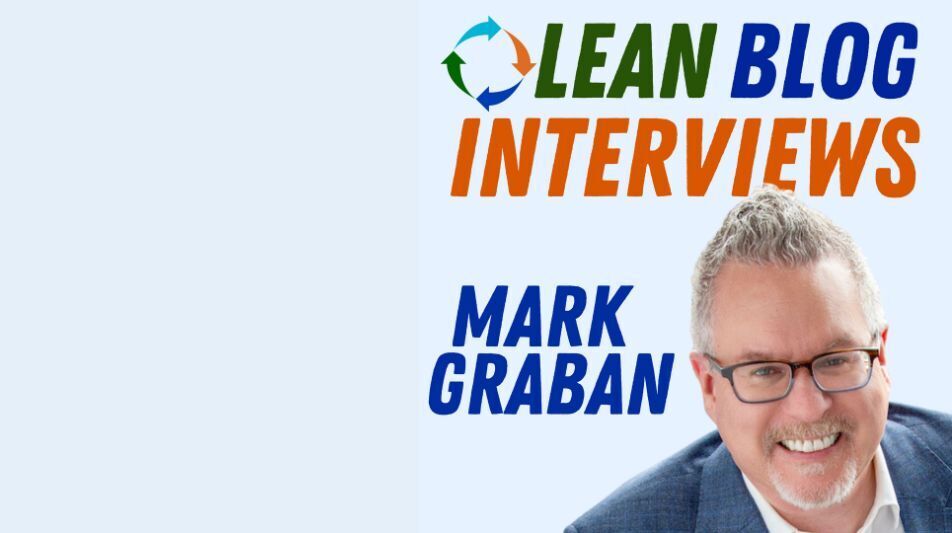
About Mark Graban
Mark Graban is an author, speaker, and consultant, whose latest book, The Mistakes That Make Us: Cultivating a Culture of Learning and Innovation, is available now.
He is also the author of the award-winning book Lean Hospitals: Improving Quality, Patient Safety, and Employee Engagement and others, including Measures of Success: React Less, Lead Better, Improve More.
He serves as a consultant through his company, Constancy, Inc, and is also a Senior Advisor for the technology company KaiNexus.
Mark hosts podcasts, including “Lean Blog Interviews” and “My Favorite Mistake.”
Education: B.S. in Industrial Engineering from Northwestern University; M.S. in Mechanical Engineering, and M.B.A. from the Massachusetts Institute of Technology’s Leaders for Global Operations Program.