Lean Blog Interviews: Real-World Lean Leadership Conversations in Healthcare and Beyond
Lean Blog Interviews: Real-World Lean Leadership Conversations features thoughtful, in-depth discussions with leaders, authors, executives, and practitioners who are applying Lean thinking in the real world.
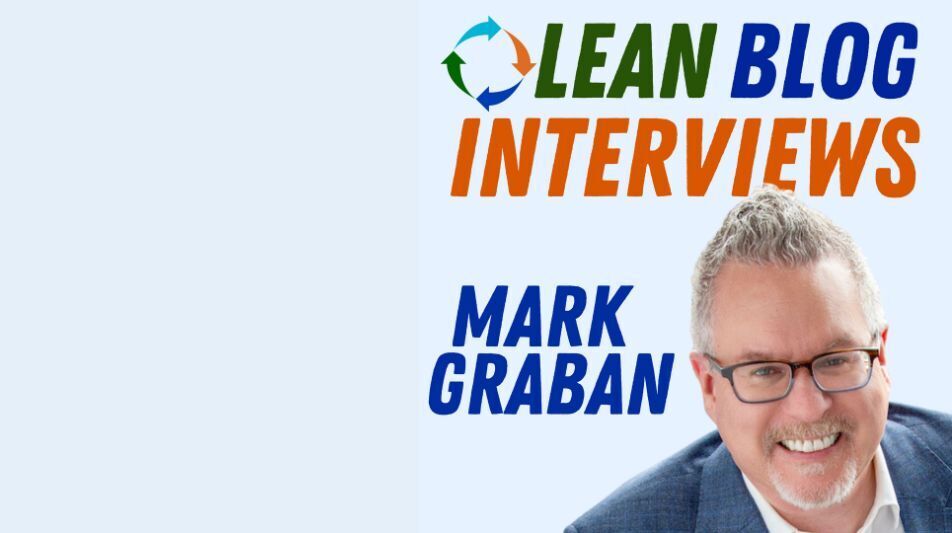
Hosted by Mark Graban—author of Lean Hospitals, Measures of Success, and The Mistakes That Make Us—the podcast explores Lean as a management system, a leadership philosophy, and a people-centered approach to continuous improvement.
Episodes span healthcare, manufacturing, startups, technology, and professional services. Guests share candid stories about what actually works—and what doesn’t—when organizations try to improve.
This is not a podcast about chasing tools, jargon, or “Lean theater.” Instead, you’ll hear honest conversations about leadership behaviors, culture, psychological safety, learning from mistakes, and building systems that help people do their best work.
If you believe improvement starts with respect for people—and that better systems beat blaming individuals—this podcast is for you.
Find show notes and all episodes at LeanCast.org.
Learn more about Mark Graban at MarkGraban.com.








Episodes

Aug 5, 2013
Aug 5, 2013
35 min
My guest for episode #183 is Scott Sambucci, who I met at the 2012 Lean Startup Conference. Scott is author of an excellent book, Startup Selling: How to sell if you really, really have to and don't know how. Scott is also founder of SalesQualia, a firm that helps people improve sales performance. His latest project is the Sales Model Canvas, an online tool.
Scott and I talk about getting better at sales (something I've honestly struggled with, as an engineer, during my time with KaiNexus). Scott talks about how “sales is a process,” what some of the biggest mistakes people can make with sales, what some common “vanity metrics” are (to be avoided), and how to look out for “vampires and gatekeepers” as you sell.
For a link to this episode, refer people to www.leanblog.org/183.
For earlier episodes, visit the main Podcast page, which includes information on how to subscribe via RSS or via Apple Podcasts.
You can also listen via Stitcher.
Podcasts Sponsored by KaiNexus
Jul 29, 2013
Jul 29, 2013
36 min
Joining me for episode #182 are Michael Grogan and Dr. Brenda Dmello, joining me via Skype from Tanzania where they are working together to use Lean to improve health care at the Comprehensive Community Based Rehabilitation in Tanzania (CCBRT). Michael is Irish born and left his career in the United States to work in Africa (which you can read about in his guest post that I published earlier this month).
In the episode, we talk about their mission to reduce maternal death rates and “needless suffering” by creating “engaging, problem solving managers” as “everything rises and falls with leadership.” They are developing leaders who can “stop blaming” and treat people with respect, eliminating the “culture of fear” that we see in far too many organizations around the world. Dr. Brenda says, “I don't think it's ethical to allow change to happen so slowly” and that “clinical skills alone” won't solve healthcare's problems.
Links about their work:
You can make donations toward their work via the Kupona Foundation
Mike Stoecklein's blog post about their work
Michael's blog post on his first 79 days in Tanzania
Register for a webinar by Michael, hosted by the ThedaCare Center for Healthcare Value on August 14
Jul 22, 2013
Jul 22, 2013
30 min
My guest for Podcast #181 is a good friend, Ron Pereira of Gemba Academy, an outstanding provider of online Lean (and now Six Sigma) education.
Ron's blog posts can now be found at the Gemba Academy blog.
I was recently a guest on episode #8 of his podcast series. Ron was also the guest host for episode #143 of my podcast, where he interviewed me with follow up questions from a webinar I did for Gemba Academy on SPC.
Before I moved to San Antonio, Ron and used to live just about five miles apart in Keller, Texas and would meet for coffee regularly… but, today, we are talking via Skype. We're talking about his background with both Six Sigma and Lean and about how these methods can be used together. Ron tells a story about a time he used statistical methods to solve something that might have been difficult with standard Lean approaches.
For a link to this episode, refer people to www.leanblog.org/181.
Conflict of interest disclosure: Gemba Academy is a formal partner of KaiNexus, a technology company I work with and have an ownership stake in. I have received a free subscription to the Gemba Academy training classes.
For earlier episodes, visit the main Podcast page, which includes information on how to subscribe via RSS or via Apple Podcasts.
Jul 15, 2013
Jul 15, 2013
34 min
Joining me for episode #180 of the Lean Blog Podcast is Dan Florizone, who served from 2008 until last month as Deputy Minister of Health in the Canadian province of Saskatchewan.
Dan has just recently transitioned into his new role as the Deputy Minister of Education and he will also focus on the application of Lean principles across all departments of the government.
Dan previously had over 25 years of healthcare management experience, including a five-year stint as CEO of the Five Hills Health Region. Dan and I first met a few years back when we were at a Lean healthcare conference hosted by Cindy Jimmerson. I really enjoyed talking with Dan and have closely followed the Lean healthcare transformation work being done in the province.
In the episode, we talk about Dan's introduction to Lean, his 2005 visit to Seattle to learn more, and how Lean is part of their “patient first” model. Lean has been a shift from “traditional cost cutting” to a “patient-centered, not provider-centered” approach to care. Lean has helped change their leadership model, where “the barrier to our change was thinking,” as Dan says.
For a link to this episode, refer people to www.leanblog.org/180.
For earlier episodes, visit the main Podcast page, which includes information on how to subscribe via RSS or via Apple Podcasts.
You can also listen via Stitcher.
Podcasts Sponsored by KaiNexus
Additional links and info:
Saskatchewan Intro to Lean Healthcare page
PROVINCE ACCELERATES LEAN JOURNEY TO IMPROVE HEALTH CARE
LeanBlog.org post: CBC on Lean in Saskatchewan Hospitals
LeanBlog.org post: Lean in a Moose Jaw Hospital
LeanBlog.org post referencing “lean design” work in Saskatchewan
Follow Trish Livingstone (@LeanSaskHealth) on Twitter
Jul 9, 2013
Jul 9, 2013
29 min
My guests for Podcast #179 are my friends Judy Worth and Tom Shuker, two of the co-authors of the book Perfecting Patient Journeys, which was published earlier this year by the Lean Enterprise Institute.
About the book: “Perfecting Patient Journeys” is a guide for leaders of healthcare organizations who want to implement lean thinking. Readers will learn how to identify and select a problem, define a project scope, and create a shared understanding of what's occurring in the value stream. Readers will also learn to develop a shared vision of an improved future, and how to work together to make that vision a reality.”
We'll talk about their book, what types of value streams and “extended value streams” are being worked on in healthcare (including “end-to-end” flows), breaking down silos, improving quality and cost as a result of taking time out of the value stream, and more.
For a link to this episode, refer people to www.leanblog.org/179.
Other links and info:
Downloads and templates from the book (see the “downloads” tab)
A review of the book by John Miller at the Gemba Panta Rei blog
A review by Tim McMahon on his blog
Conflict of interest disclosure: I received a free copy of the physical book and e-Book from the Lean Enterprise Institute and I am formerly an employee of LEI.
For earlier episodes, visit the main Podcast page, which includes information on how to subscribe via RSS or via Apple Podcasts.
You can also listen via Stitcher.
Podcasts Sponsored by KaiNexus
Jun 24, 2013
Jun 24, 2013
29 min
Joining me for Podcast #178 is Drew Greenblatt, President and Owner of Marlin Steel Wire Products, a manufacturing company based in Baltimore. I was really impressed with Drew's keynote talk at the recent AME Southwest Region conference here in San Antonio. Drew's company is successfully competing against cheap Chinese imports by using Lean and “theory of constraints” methods, being passionate about serving customer needs, and making a commitment to (and investment in) his employees.
Whether you're a manufacturer who is considering “re-shoring” your production (or avoiding off-shoring) or if you're an organization looking to success by partnering with all of your employees, I think you'll find Drew inspiring.
Drew and Marlin Steel Wire are featured in this month's Fast Company magazine
Check out Bill Waddell's recent blog post about Drew and Marlin Wire.
Inc. Magazine article on Drew
Video of Eli Goldratt's last speech, shared by Drew online
For a link to this episode, refer people to www.leanblog.org/178.
For earlier episodes, visit the main Podcast page, which includes information on how to subscribe via RSS or via Apple Podcasts.
You can also listen via Stitcher.
Podcasts Sponsored by KaiNexus
Jun 10, 2013
Jun 10, 2013
24 min
My guest for Podcast #177 is a returning guest, Bob Emiliani. In this episode, we're talking about one of his latest eBooks: Nobody Is Exempt From Improvement.
Check out our previous podcasts together – Episodes 132, 77, 48, 38, and 30. Bob is a professor at Central Connecticut State University and a prolific author on Lean management.
Also check out his new book – “The Lean Professor.”
For a link to this episode, refer people to www.leanblog.org/177.
For earlier episodes, visit the main Podcast page, which includes information on how to subscribe via RSS or via Apple Podcasts.
You can also listen via Stitcher.
Podcasts Sponsored by KaiNexus
May 29, 2013
May 29, 2013
25 min
Show notes: https://www.leanblog.org/176
Remastered June 20201
Today, we discuss his latest book, The Harada Method: The Spirit of Self-Reliance.
Joining me once again for episode #176 is my mentor good friend Norman Bodek, who has been a guest many times here.
You can also learn more about the book and Norman's workshops at his website, PCSPress.com. As always, it's great to hear Norman talk about his interests and what he has learned in his trips to Japan, including Takashi Harada's work.
For a link to this episode, refer people to www.leanblog.org/176.
For earlier episodes of my podcast, visit the main Podcast page, which includes information on how to subscribe via RSS, through Android apps, or via Apple Podcasts. You can also subscribe and listen via Stitcher. Please leave us a review and rating!
May 16, 2013
May 16, 2013
28 min
My guest for podcast #175 is Mike Taubitz of the firm Sustainable Lean and FDR Safety. Mike is a retired GM employee (including a stint as Global Safety Director) and we met at the Michigan Lean Consortium conference in 2011. We quickly discovered our shared interest in Dr. Deming, Lean, and, most importantly, safety improvement.
I hope you enjoy our chat about his background and lessons from his career, the integration of Lean practices and safety improvement, lessons from Paul O'Neill and other great topics. Like my dad, Mike is a graduate of the then General Motors Institute (now Kettering University).
Some key quotes:
“It's not just what you do, but why.”
5S is not just neat, clean, and organized – it's about team identifying waste and developing standards
We are “a nation of solution seekers” instead of working on “foundational thinking.”
For a link to this episode, refer people to www.leanblog.org/175.
For earlier episodes, visit the main Podcast page, which includes information on how to subscribe via RSS or via Apple Podcasts.
May 8, 2013
May 8, 2013
37 min
My guest for podcast #174 is John Hunter, a long-time friend and fellow blogger – at his Curious Cat Management Improvement Blog and, more recently, as a blogger for the W. Edwards Deming Institute. John has recently published a book through LeanPub.com titled “Management Matters.”
In this episode, John joins us from Malaysia, where he has been living, and we talk about his quality background – growing up in Madison, Wisconsin, influenced by his dad (William Hunter), Brian Joiner, George Box, Dr. Deming, and others. John also talks about his book and work, why long-term thinking is such a rare commodity, and some of the lessons from Dr. Deming that mean the most to him.
For a link to this episode, refer people to www.leanblog.org/174.
For earlier episodes, visit the main Podcast page, which includes information on how to subscribe via RSS or via Apple Podcasts.
About Mark Graban
Mark Graban is an author, speaker, and consultant, whose latest book, The Mistakes That Make Us: Cultivating a Culture of Learning and Innovation, is available now.
He is also the author of the award-winning book Lean Hospitals: Improving Quality, Patient Safety, and Employee Engagement and others, including Measures of Success: React Less, Lead Better, Improve More.
He serves as a consultant through his company, Constancy, Inc, and is also a Senior Advisor for the technology company KaiNexus.
Mark hosts podcasts, including “Lean Blog Interviews” and “My Favorite Mistake.”
Education: B.S. in Industrial Engineering from Northwestern University; M.S. in Mechanical Engineering, and M.B.A. from the Massachusetts Institute of Technology’s Leaders for Global Operations Program.