Lean Blog Interviews: Real-World Lean Leadership Conversations in Healthcare and Beyond
Lean Blog Interviews: Real-World Lean Leadership Conversations features thoughtful, in-depth discussions with leaders, authors, executives, and practitioners who are applying Lean thinking in the real world.
Hosted by Mark Graban—author of Lean Hospitals, Measures of Success, and The Mistakes That Make Us—the podcast explores Lean as a management system, a leadership philosophy, and a people-centered approach to continuous improvement.
Episodes span healthcare, manufacturing, startups, technology, and professional services. Guests share candid stories about what actually works—and what doesn’t—when organizations try to improve.
This is not a podcast about chasing tools, jargon, or “Lean theater.” Instead, you’ll hear honest conversations about leadership behaviors, culture, psychological safety, learning from mistakes, and building systems that help people do their best work.
If you believe improvement starts with respect for people—and that better systems beat blaming individuals—this podcast is for you.
Find show notes and all episodes at LeanCast.org.
Learn more about Mark Graban at MarkGraban.com.








Episodes

Apr 5, 2012
Apr 5, 2012
25 min
Like podcast #133, this episode is a Q&A that follows up a webinar I did for my good friends at Gemba Academy recently, on the topic “Using Statistical Process Control (SPC) to Make Better Management Decisions.”
You can view a recording of the webinar here or on the Gemba Academy website. You can get the slides here.
This might seem like an esoteric topic, but it's one I've found to be VERY practical and helpful in my career and with my clients. Some feedback I got included, “That wasn't nearly as boring as one might have expected.” :-)
Update: This topic is something I later explored in my 2018 book Measures of Success: React Less, Lead Better, Improve More.
For a link to this episode, refer people to www.leanblog.org/143.
For earlier episodes, visit the main Podcast page, which includes information on how to subscribe via RSS or via Apple Podcasts.
Mar 13, 2012
Mar 13, 2012
11 min
Episode page
Episode #142 brings us a returning guest (#115), Eric Ries, author of the best-selling book The Lean Startup: How Today's Entrepreneurs Use Continuous Innovation to Create Radically Successful Businesses.
In the book, Eric cites the work of Taiichi Ohno, including the “5 Whys” problem-solving approach. In this podcast, Eric shares his story about finding Ohno's work (including the Lean classic Toyota Production System: Beyond Large-Scale Production) and how it has influenced his work with startups.
For a link to this episode, refer people to www.leanblog.org/142.
For earlier episodes, visit the main Podcast page, which includes information on how to subscribe via RSS or via Apple Podcasts.
Eric: It's been incredibly influential. I think I would go so far as to say it has changed my life. It's actually just a coincidence. It's a funny thing how these things work. To set the stage a little bit, I had founded a company called IMVU in 2004.
I was really into a lot of the ideas that are called Agile software development, which have their origins in Lean, but a lot of the works I had read about them, Toyota was not specifically mentioned. Lean principles were not mentioned. I didn't know the theory of Lean or anything like that. I knew nothing about manufacturing.
I've actually, to be totally honest, never set foot in a manufacturing plant in my whole life. I have no idea any of that would be relevant to me. I had this intuition that we should be going a lot faster in a startup and doing practices that even in the Agile world were considered a little bit extreme.
We've had the chance to talk about them on other occasions, things like continuous deployment or putting software in customers' hands much faster than was previously considered possible. I had this problem which was I had no way to explain to anybody why that was going to work. People would look at me like I was completely crazy.
I could see that it was working, so I was very stubborn. I had this intuition. I said, “We're going to do it no matter what.” It was working, but we're always hiring new employees. The company's growing. We're bringing on investors.
We had investors that when they were doing their due diligence for the company, pulled out because they didn't like the answers I was giving them about how we built the technology.
They would bring their experts in, experts trained in more traditional software development methodologies, and they'd be like, “This kid is crazy. Doesn't know what he's talking about. This is not the way it's done.” This is a continuous point of stress for me and my co-founder. [laughs]
You got to remember, at the time, I was by far the youngest person on the team. I was often younger than the employees I was hiring and training them in this method. It's not like it was an easy situation to be in, but I really believed it was right.
I was reading everything I could get my hands on for ideas about, first of all, was I actually right or was it a fluke? If it was right, how could I possibly explain it? I read some cases about Toyota, the business school cases, so I was a little bit familiar with it. There was this thing called Toyota Production System. That's all I knew. I figured I should be educated about it.
Mar 7, 2012
Mar 7, 2012
30 min
Show notes: https://www.leanblog.org/141
Remastered audio June 2021
Episode #141 is a chat with Norman Bodek, as he shares his recollections of working with Taiichi Ohno, one of the creators of the Toyota Production System. Norman met and worked with Ohno in Japan and then published the translation of Ohno's classic book Toyota Production System: Beyond Large-Scale Production in 1988.
For a link to this episode, refer people to www.leanblog.org/141.
For earlier episodes, visit the main Podcast page, which includes information on how to subscribe via RSS or via Apple Podcasts.
Feb 28, 2012
Feb 28, 2012
32 min
Episode #140 is a discussion with Scott Patten and Peter Armstrong from LeanPub.com – they want to be THE website for publishing “in-progress books”. We'll be talking about lean publishing and how that's different than self publishing and about how leanpub.com works. In the upcoming part 2 of the podcast, we'll talk more about how they are applying the concepts of the Lean Startup methodology to their service and their business.
Conflict of interest disclosure: I have published a number of books through Leanpub. I'm a huge raving fan of their service and the way Scott and Peter have worked with me as I learned and used Leanpub.com.
For a link to this episode, refer people to www.leanblog.org/140.
For earlier episodes, visit the main Podcast page, which includes information on how to subscribe via RSS or via Apple Podcasts.
Feb 22, 2012
Feb 22, 2012
25 min
Episode #139 is a conversation with Dave Munch, MD, the Senior Vice President and Chief Clinical Officer for Healthcare Performance Partners (HPP). Before joining the consulting firm, Dave was a senior C-level clinical leader at Exempla Lutheran Health System where he led their Lean Production applications for more than five years, resulting in substantial improvements in both clinical and non-clinical processes.
Today, we are talking about important Lean mindsets and systems principles, including making it safe for people to surface problems in the workplace and aligning management behaviors and methods at all levels so we can use Lean to achieve our most important objectives in healthcare. Dave is also a speaker at the upcoming Lean Healthcare PowerDay event, produced by HPP. Hope to see you there!
Conflict of interest disclosure: I will be a paid speaker at the Lean PowerDay event.
For a link to this episode, refer people to www.leanblog.org/139.
For earlier episodes, visit the main Podcast page, which includes information on how to subscribe via RSS or via Apple Podcasts.
Feb 8, 2012
Feb 8, 2012
26 min
Episode #138 is a discussion with Al Norval from Lean Pathways, talking about his new publication titled:
“The Lean Manifesto: Back to basics – how a Lean business system creates value by engaging everyone in improvement.”
It's a free six-page document and you can download it here. The manifesto is a fun, upbeat guide to the basics of the Lean methodology and management system, including a brief history of Lean, as well as its foundational concepts, and a discussion of why “just in time” is not the right place to start.
Conflict of interest disclosure: I have a business relationship with Lean Pathways where I sometimes work with their healthcare clients.
For a link to this episode, refer people to www.leanblog.org/138.
For earlier episodes, visit the main Podcast page, which includes information on how to subscribe via RSS or via Apple Podcasts.
If you have feedback on the podcast, or any questions for me or my guests, you can email me at leanpodcast@gmail.com or you can call and leave a voicemail by calling the “Lean Line” at (817) 993-0630 or contact me via Skype id “mgraban”. Please give your location and your first name. Any comments (email or voicemail) might be used in follow ups to the podcast.
About Al Norval (from the Lean Pathways website):
Alistair Norval is a professional engineer who developed his skills at Eastman Kodak Company, where he helped design and implement the Kodak Operating System, based on the principles of the Toyota Production System. In this capacity, he received in-depth personal training with leading international senseis. Following that, Alistair helped guide Celestica International, a provider of Electronic Manufacturing Services, with their lean journey at multiple site value streams in Asia. More recently, Alistair has been guiding clients on their lean transformation while achieving significant business results. His clients include the Medical, Consumer, and Professional Services business sectors.
Alistair has been a manager of manufacturing, product and process engineering, and has helped launch several plants. His experience covers both continuous chemical processes as well as discrete manufacturing. He has applied lean methods in new product development and the supply chain. His passion is to apply lean thinking across the enterprise so as to achieve consistently superior results.
Feb 1, 2012
Feb 1, 2012
25 min
Episode #137 is a chat with Jerry Bussell, founder of the Jacksonville Lean Consortium. I've met and talked with Jerry many times through LEI, so I'm thrilled to finally get him on the podcast.
Jerry is a retired Medtronic executive (leading Lean efforts in a unit that won the Shingo Prize); he's now doing work with healthcare quality improvement, he's writing a new book, and he's speaking at the Lean Transformation Summit next month in Jacksonville.
Jerry is also friends with Sami Bahri, DDS – and he's also a patient of the “World's First Lean Dentist” (click here for my podcasts with Sami, episodes 29, 69, and 82).
For a link to this episode, refer people to www.leanblog.org/137.
For earlier episodes, visit the main Podcast page, which includes information on how to subscribe via RSS or via Apple Podcasts.
If you have feedback on the podcast, or any questions for me or my guests, you can email me at leanpodcast@gmail.com or you can call and leave a voicemail by calling the “Lean Line” at (817) 993-0630 or contact me via Skype id “mgraban”. Please give your location and your first name. Any comments (email or voicemail) might be used in follow ups to the podcast.
About Jerry Bussell (from the Lean Transformation Summit site):
Sporting a license plate reading “Leanjax,” Jerry Bussell is the past chairman and founder of the Jacksonville Lean Consortium, a group of companies and government agencies improving business performance by sharing knowledge about implementing lean principles. Recently retired as vice president, Global Operations, at Medtronic Surgical Technologies, Bussell is president of Bussell Lean Associates, a lean management advisory service for CEOs and their executive teams. He is also an executive advisor to Underwriters Laboratories' Center of Continuous Improvement and Innovation.
Bussell received the prestigious Medtronic Wallin Leadership award for transforming Medtronic ENT's traditional manufacturing operation into a nationally recognized model of lean manufacturing. Under his leadership, Medtronic ENT/NT received an IndustryWeek Best Plants award for North America in 2002, a Shingo Prize in 2003, and a Shingo Silver Medallion recipient in 2009. In 2005 Bussell was inducted into the Shingo Academy for his contributions to operational excellence. He is a past chairman of the Board of Governors for the Shingo Prize and is a member of the Champions Club with the Association for Manufacturing Excellence. Bussell holds a bachelor's degree from St. John Fisher College and a master's degree from Baylor University.
He is currently writing a book on lean leadership lessons from Abraham Lincoln that will be available in 2012.
Jan 25, 2012
Jan 25, 2012
21 min
Our guest for episode #136 is Paul Akers, President of FastCap and author of the book 2 Second Lean.
Remastered August 2021
Here, we are talking about the new book and how small improvements that save two seconds in your daily work can contribute to an engaging and fun “Lean Culture.” You can also view a video recording of the discussion here on YouTube.
Paul was previously a guest on episode #122, talking about LeanAmerica.org, so please check that out too.
For a link to this episode, refer people to www.leanblog.org/136.
Jan 3, 2012
Jan 3, 2012
25 min
Our guest for episode #135 is Dan Markovitz, author of the new book A Factory of One: Applying Lean Principles to Banish Waste and Improve Your Personal Performance.
If your New Year's resolutions include improving your own personal productivity, Dan is a great person to talk to about the application of Lean principles to your own professional work – whether you work in an aspiring Lean organization or not.
Dan was previously a guest on episode #52, so please check that out too.
For a link to this episode, refer people to www.leanblog.org/135.
For earlier episodes, visit the main Podcast page, which includes information on how to subscribe via RSS or via Apple Podcasts.
Dec 22, 2011
Dec 22, 2011
31 min
Episode #134 is a different topic than usual. Instead of strictly talking Lean, today's discussion is about broader issues of healthcare quality and our United States military.
Joining me are Daniel Sullivan, President and General Manager of the The Sergeant Thomas Joseph Sullivan Center (SSC), a non-profit organization that is dedicated to improving health outcomes for current and former military personnel, especially those who are suffering from emerging, complicated, or currently unexplained post deployment health concerns. Named in honor of a fallen marine, the Sgt. Sullivan Center promotes the health security of America's troops and the principle that none should be left behind. Also joining us is Gregory Jacobson, MD, a college friend of Daniel's and the co-founder and CEO of KaiNexus, also a board member of the Center.
The Sergeant Sullivan Center is named for Daniel's brother, Sergeant Thomas Joseph Sullivan, a veteran of the Iraq war, who died suddenly in his northern Virginia home at age 30, four years after returning from deployment. With his medical problems originating during his deployment in Iraq and continuing in the years following his return home, Sgt. Sullivan suffered a progression of unexplained health complications that included chronic pain, swelling, cardiovascular disease, and severe inflammation. His autopsy revealed life threatening problems that medical tests had not detected.
Today would have been St. Sullivan's 32nd birthday, so I am sharing his story here.
For a link to this episode, refer people to www.leanblog.org/134.
More About the Sergeant Sullivan Center:
Their website
Sgt. Sullivan's story and a video
Speech on healthcare quality by Gregory Jacobson, MD
For earlier episodes, visit the main Podcast page, which includes information on how to subscribe via RSS or via Apple Podcasts.
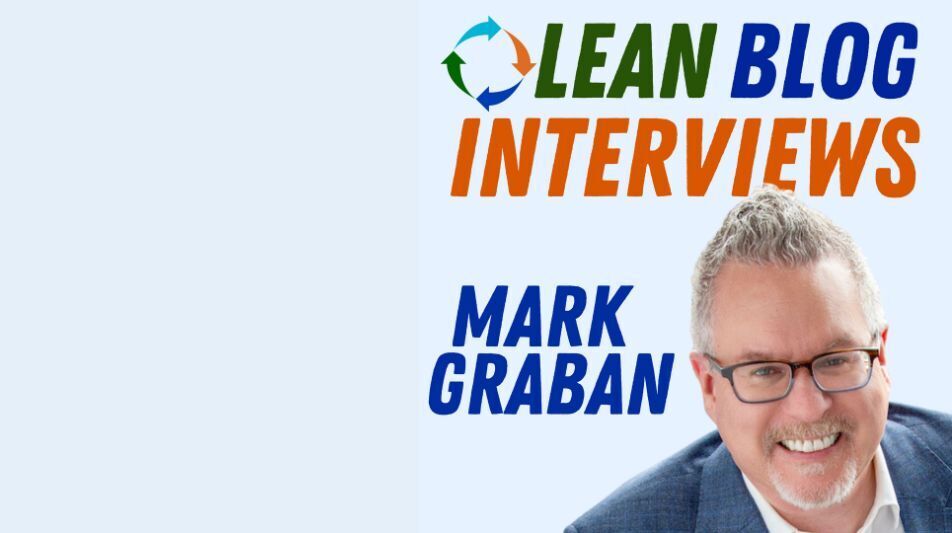
About Mark Graban
Mark Graban is an author, speaker, and consultant, whose latest book, The Mistakes That Make Us: Cultivating a Culture of Learning and Innovation, is available now.
He is also the author of the award-winning book Lean Hospitals: Improving Quality, Patient Safety, and Employee Engagement and others, including Measures of Success: React Less, Lead Better, Improve More.
He serves as a consultant through his company, Constancy, Inc, and is also a Senior Advisor for the technology company KaiNexus.
Mark hosts podcasts, including “Lean Blog Interviews” and “My Favorite Mistake.”
Education: B.S. in Industrial Engineering from Northwestern University; M.S. in Mechanical Engineering, and M.B.A. from the Massachusetts Institute of Technology’s Leaders for Global Operations Program.