Lean Blog Interviews: Real-World Lean Leadership Conversations in Healthcare and Beyond
Lean Blog Interviews: Real-World Lean Leadership Conversations features thoughtful, in-depth discussions with leaders, authors, executives, and practitioners who are applying Lean thinking in the real world.
Hosted by Mark Graban—author of Lean Hospitals, Measures of Success, and The Mistakes That Make Us—the podcast explores Lean as a management system, a leadership philosophy, and a people-centered approach to continuous improvement.
Episodes span healthcare, manufacturing, startups, technology, and professional services. Guests share candid stories about what actually works—and what doesn’t—when organizations try to improve.
This is not a podcast about chasing tools, jargon, or “Lean theater.” Instead, you’ll hear honest conversations about leadership behaviors, culture, psychological safety, learning from mistakes, and building systems that help people do their best work.
If you believe improvement starts with respect for people—and that better systems beat blaming individuals—this podcast is for you.
Find show notes and all episodes at LeanCast.org.
Learn more about Mark Graban at MarkGraban.com.








Episodes

Jun 12, 2008
Jun 12, 2008
22 min
Episode #46 is a chat with a good friend of the Lean Blog, Dean Bliss, a Lean Improvement Specialist with the Iowa Health System. Like myself, Dean made a transition in from manufacturing into health care a few years back, he'll share some of his experiences and recommendations for how to use Lean in a hospital and how to make that transition. He will also share some stories about how his hospital prioritized what problems to solve with the Lean methodology. If you have feedback on the podcast, or any questions for me or my guests, you can email me at leanpodcast@gmail.com or you can call and leave a voicemail via Skype id "mgraban". Please give your location and your first name. Any comments (email or voicemail) might be used in follow ups to the podcast.
Jun 3, 2008
Jun 3, 2008
22 min
Episode #45 is another conversation with Dr. Gwendolyn Galsworth, who you might remember from Episode #26 last year. In this episode, we talk about “Visual Displays,” a topic from her Shingo Award-winning book Visual Workplace, Visual Thinking: Creating Enterprise Excellence Through the Technologies of the Visual Workplace. Gwendolyn established Quality Methods International (QMI) in 1991 as a consulting, training and research firm, specializing in the Visual Workplace.
May 21, 2008
May 21, 2008
18 min
Episode #44 of the LeanBlog Podcast is a conversation with Ralph Keller, the President of AME, the Association for Manufacturing Excellence. Today, we're discussing AME and their upcoming regional conference in San Diego, to be held June 9 to 11, 2008. If you have feedback on the podcast, or any questions for me or my guests, you can email me at leanpodcast@gmail.com or you can call and leave a voicemail via Skype id "mgraban". Please give your location and your first name. Any comments (email or voicemail) might be used in follow ups to the podcast.
May 18, 2008
May 18, 2008
24 min
Episode #43 of LeanBlog Podcast is a very special one. My guest is Mike Mickleright, writer, consultant, and performer -- most interesting to me is his impersonation of Dr. W. Edwards Deming. As I wrote about before, I've seen his DVD and Mike agreed to create this podcast with me. We start off talking with Mike about his background with Dr. Deming and how he created the impersonation. Then, we shift into me interviewing Mike as Dr. Deming, asking him some questions on modern quality approaches including Lean and Six Sigma. His website is www.mikemick.com. If you have feedback on the podcast, or any questions for me or my guests, you can email me at leanpodcast@gmail.com or you can call and leave a voicemail by calling the "Lean Line" at (817) 776-LEAN (817-776-5326) or contact me via Skype id "mgraban". Please give your location and your first name. Any comments (email or voicemail) might be used in follow ups to the podcast.
May 7, 2008
May 7, 2008
22 min
Mistake-proofing expert Martin Hinckley, president of Assured Quality and author of "Make No Mistake: An Outcome-Based Approach to Mistake-Proofing," joins Mark to discuss why rare mistakes require a fundamentally different approach than statistical variation -- and why traditional inspection can never fully control them.
Episode page with links and more http://leanblog.org/42
They cover the difference between mistakes and variation, why Six Sigma alone couldn't get defect rates where companies like Motorola and GE Aircraft Engines wanted them, the real meaning of poka-yoke, and why effective mistake-proofing always makes the work easier rather than more complex.
Re-mastered audio, April 2026
Apr 27, 2008
Apr 27, 2008
12 min
Episode page
Here is LeanBlog Podcast #41 with Dr. Jeffrey Liker, Professor of Industrial and Operations Engineering at the University of Michigan. Dr. Liker is most recently the co-author (with Michael Hoseus) of Toyota Culture: The Heart and Soul of the Toyota Way and many other books, which can be found here on Amazon.com. This is part 3 of our recent series. Today, we talk about the development of managers within a Lean organization.
For earlier episodes, visit the main Podcast page, which includes information on how to subscribe via RSS or via Apple Podcasts.
LeanBlog Podcast #41 Key Points & Links
From a listener: Many companies shift managers around almost constantly. How does Toyota develop their managers in a way that helps encourage “respect for people?”
Other companies where Toyota can find similar leaders: NUMMI, Subaru
Developing vs hiring leaders — does your culture just evolve or do you teach the culture?
3 years is typically the rule of thumb for how long a manager should be in place, more important, though, is who is there in the workgroup who provides leadership? Is there someone to pick up the leadership gap if one person leavfes?
Toyota does rotate leaders to develop people
With the “quality people value stream,” you should be developing people every day
Dr. Liker talks about his firm Optiprise
Apr 12, 2008
Apr 12, 2008
20 min
Episode page: leanblog.org/40
Here is LeanBlog Podcast #40, an interview with a retired UAW/GM employee who wishes to remain anonymous, at this point. We have traded many emails over the past year, about Lean, and I'm impressed with this individual's true passion for Lean and Toyota Production System concepts.
We both agree that the “root cause” of many Lean struggles comes back to management's inability to create trust and to give up some control to the employees who actually do the work.
The intent here, from my perspective, is not “management bashing,” but rather to illustrate that there are some on the UAW side who “get it” and success is going to require true cooperation and sacrifices on both sides.
LeanBlog Podcast #40 Key Points & Key Words
“Quality Network” – GM and the UAW
GM had been working with Lean methods since the early 1990's, but not associating it with “Lean” (Toyota) until this decade
The need for trust and culture change — changing the “them vs. us” attitude
Mar 30, 2008
Mar 30, 2008
17 min
Episode page
Here is LeanBlog Podcast #39, once again featuring Dr. Jeffrey Liker, Professor of Industrial and Operations Engineering at the University of Michigan. Dr. Liker is most recently the co-author (with Michael Hoseus) of Toyota Culture: The Heart and Soul of the Toyota Way and many other books, which can be found here on amazon.com.
This is part 2 of what will be a 3-part podcast series, so be sure to check back. Today, we talk about some of the challenges that organizations face in trying to adopt a Lean Culture.
Click for the entire series with Prof. Liker.
For earlier episodes, visit the main Podcast page, which includes information on how to subscribe via RSS or via Apple Podcasts.
LeanBlog Podcast #39 Key Points & Links
Will Dr. Liker be writing more about companies who have gone through the Lean culture transformation, examples other than Toyota, ala his earlier book, Becoming Lean: Inside Stories of U.S. Manufacturers?
Bob Emiliani's book on Wiremold: Better Thinking, Better Results
Case Study and Analysis of an Enterprise-Wide Lean Transformation
Why is it so hard to find examples of companies that have really adopted a Lean culture?
Thoughts on the impact of top American leaders departing Toyota (Jim Press and Gary Convis)
Mar 9, 2008
Mar 9, 2008
22 min
Episode page
Here is LeanBlog Podcast #38, our guest today is Bob Emiliani, the author of Practical Lean Leadership: A Strategic Leadership Guide For Executives. It's a workbook-style guide that forces you to think through your own leadership approach and your own situation.
In this podcast, we talk about “lean leadership,” “value added behaviors,” and some pitfalls to avoid in lean implementations.
LeanBlog Podcast #38 Key Points & Key Words
How Bob first got involved with Lean and, especially, the leadership component.
What's different about this new Lean book?
What are some examples of “non-value-added” management activities or behaviors?
A definition of kaizen that emphasizes that kaizen cannot be sub-optimizing, you must look at the whole
Some errors to avoid in Lean implementation, avoiding “fake Lean”
Mar 2, 2008
Mar 2, 2008
17 min
Episode page
Here is LeanBlog Podcast #37, once again featuring Dr. Jeffrey Liker, Professor of Industrial and Operations Engineering at the University of Michigan. Dr. Liker is most recently the co-author (with Michael Hoseus) of Toyota Culture: The Heart and Soul of the Toyota Way and many other books, which can be found here on amazon.com. This is part 1 of what will be a 3-part podcast series. Listen to part 2 and part 3.
For earlier episodes, visit the main Podcast page, which includes information on how to subscribe via RSS or via Apple Podcasts.
LeanBlog Podcast #37 Key Points
Overview of the book, how it builds on the previous books.
The people part is such a foundation of the Toyota Way, had to expand upon it.
Looking at the cultural assumptions in the 14 principles.
In the book, seeing a “day in the life” of a Toyota supervisor.
Get a clearer picture of the “respect for people” principle throughout the book
Thoughts on implementing Lean the “wrong way.”
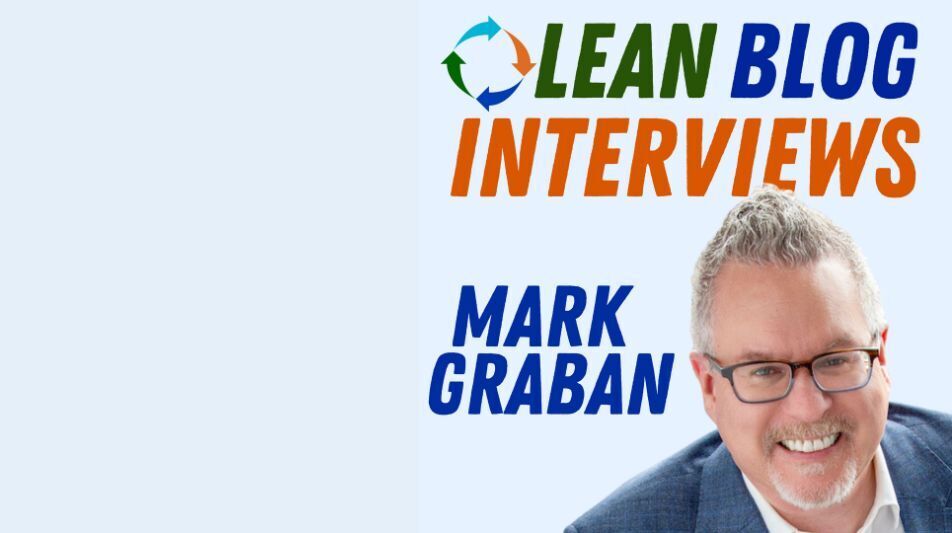
About Mark Graban
Mark Graban is an author, speaker, and consultant, whose latest book, The Mistakes That Make Us: Cultivating a Culture of Learning and Innovation, is available now.
He is also the author of the award-winning book Lean Hospitals: Improving Quality, Patient Safety, and Employee Engagement and others, including Measures of Success: React Less, Lead Better, Improve More.
He serves as a consultant through his company, Constancy, Inc, and is also a Senior Advisor for the technology company KaiNexus.
Mark hosts podcasts, including “Lean Blog Interviews” and “My Favorite Mistake.”
Education: B.S. in Industrial Engineering from Northwestern University; M.S. in Mechanical Engineering, and M.B.A. from the Massachusetts Institute of Technology’s Leaders for Global Operations Program.