Lean Blog Interviews: Real-World Lean Leadership Conversations in Healthcare and Beyond
Lean Blog Interviews: Real-World Lean Leadership Conversations features thoughtful, in-depth discussions with leaders, authors, executives, and practitioners who are applying Lean thinking in the real world.
Hosted by Mark Graban—author of Lean Hospitals, Measures of Success, and The Mistakes That Make Us—the podcast explores Lean as a management system, a leadership philosophy, and a people-centered approach to continuous improvement.
Episodes span healthcare, manufacturing, startups, technology, and professional services. Guests share candid stories about what actually works—and what doesn’t—when organizations try to improve.
This is not a podcast about chasing tools, jargon, or “Lean theater.” Instead, you’ll hear honest conversations about leadership behaviors, culture, psychological safety, learning from mistakes, and building systems that help people do their best work.
If you believe improvement starts with respect for people—and that better systems beat blaming individuals—this podcast is for you.
Find show notes and all episodes at LeanCast.org.
Learn more about Mark Graban at MarkGraban.com.








Episodes

Jan 14, 2007
Jan 14, 2007
25 min
Show notes: https://www.leanblog.org/16
Remastered July 2021
LeanBlog Podcast #16 is the first part of two with Jim Baran, the Owner of Value Stream Leadership, a leading recruiting firm that specializes in Lean talent. I've known Jim for a few years now and he's helped me and some colleagues in the past. He's a great recruiter who really takes some interest in you and your career. If you're looking to make a career change or if you're looking for lean talent, I can personally recommend him.
In our discussion, we talk about the state of the job market for folks with lean experience and what helps a lean candidate stand out in the marketplace. If you enjoy this podcast, I hope you'll check out the rest of the series by visiting the LeanBlog podcast main page.
Show Notes and Approximate Time, Episode #16
1:30 About Jim, his background with lean, about his firm
2:50 What does it mean, “retained search firm”?
4:40 Jim's firm defines lean as “Toyota Way leadership” — Toyota Production System AND the Toyota Product Development System
5:00 How is the job market for lean talent, generally speaking?
6:30 People “used to hire forktruck operators out of Toyota” because they thought they knew the secret sauce
7:40 Jim Womack's email about the end of “the lean tool age”
8:00 How do you consider someone's individual or local lean accomplishments versus a good candidate having been in a prototypical lean company?
9:30 What are Jim's 5 profiles for excellent lean candidates?
10:30 Been in the Toyota Product Development System market very heavily lately, the talent with experience there has been slim
12:30 The market for lean in services areas
16:00 What about recruitment for executive level positions?
21:45 Harder to find people who can use lean to drive growth or revenue rather than only reducing costs/waste
Jan 7, 2007
Jan 7, 2007
22 min
Show notes: https://leanblog.org/15
Remastered July 2021
eanBlog Podcast #15 is a new discussion with a previous Podcast guest, Jim Huntzinger. Last time, we talked about the Lean Accounting Summit.
This time, we're talking about the renaissance of the “Training Within Industry” program. We'll talk about the origins of this program, the impact it had on Toyota and the Toyota Production System, and why the program is being bought back in the United States and in lean circles.
Jim is also organizing a Training Within Industry Summit, June 5-6 of 2007. Check the Show Notes, down below, for more links to TWI resources and information.
Show Notes and Approximate Time, Episode #15
Background: Copies of the original TWI manuals
Background: Wikipedia page on TWI
2:30 Background of the TWI program prior to the U.S. entry into WWII
3:15 How did TWI get promoted in Japan during the U.S. occupation?
4:15 How did TWI get incorporated into the Toyota Production System? “It is an excellent industrial training program on its own” but Toyota also built upon the system
6:00 What were some of the motivations behind TWI? What did they hope to achieve?
7:15 What are the different components of the TWI approach… Job Methods and Job Instruction, the focus on training people HOW to train, etc.
9:15 At Toyota, Ohno thought “Job Methods” was a little too “point focused” and he wanted to look more at the “value stream”
9:45 “Job Relations” focuses on how to be a supervisor, how to drive kaizen, etc.
11:00 How did TWI get “rediscovered” recently? Mentioned in the book Becoming Lean: Inside Stories of U.S. Manufacturers
13:45 What are the unique things Toyota was able to do with the TWI program?
14:15 TWI was focused on training NEW employees, how does TWI apply when you have long time employees who never had standard work or standard methods?
15:45 Toyota still uses Job Instruction today for training their experienced people
16:15 TWI says you have to “get the employee motivated to learn” – how do you do this?
17:45 Why did American companies move away from TWI after the war?
19:00 Early challenges with getting management focused on sustaining TWI methods
19:30 To learn more about TWI:
Training Within Industry: The Foundation Of Lean (Don Dinero, history of TWI)
The Twi Workbook: Essential Skills for Supervisors (Bob Wrona, hos to use TWI today)
Jim's article “The Roots of Lean”
Plenty of articles and references through Google
Dec 28, 2006
Dec 28, 2006
37 min
Show notes: https://www.leanblog.org/14
Remastered July 2021
LeanBlog Podcast #14 is a discussion with Dave Gleditsch, the Chief Technology Officer for Pelion Systems, a leading provider of software for lean manufacturing applications.
I first met Dave after I read his Industry Week columns and traded some emails with him. He has a great background in manufacturing and lean, so I think he has an interesting perspective to share on lean and technology.
Don't worry, this podcast isn't a sales pitch for Pelion's software. I think you'll enjoy the discussion.
Show Notes and Approximate Time, Episode #14
2:00 What prompted you to write your first column?
2:30 The real issue was a poor definition of what lean really is, lean has some very concrete things for improving and innovating.
3:30 It's not just cost cutting, it's about maximizing customer value with the minimum required resources.
4:20 At American Standard, lean helped save the company, but it also became a platform for growth
5:00 Do traditionally cost driven people automatically focus on lean as only a cost cutting tool?
6:00 In the boardrooms, the real cost is gross margin expansion — impacting the top line AND the bottom line (lean and six sigma are great tools for that). You can't just cut costs on the path to growth.
7:00 How first introduced to lean concepts?
9:20 Had a lot of lean experience at HP in the 1980's, worked with Shingo, Hall, Schonberger, etc. Had to try to interpret the original Shingo “Green Book.” (A Study of the Toyota Production System from an Industrial Engineering Viewpoint)
10:40 Hall's book Zero Inventories
11:00 Dave working with Shigeo Shingo
12:00 More about Dave's experiences with lean at American Standard
15:20 What is Pelion Systems? What services and technology do they offer?
18:40 Pelion had the first web kanban portal
19:10 What business problem is Pelion helping to solve?
20:45 Can technology help speed up or further a culture change?
24:00 You have to look at more than manufacturing, but also at how different parts of the companies work together.
25:20 What about The Toyota Way principle about technology? “Use only reliable, thoroughly tested technology that serves your people and processes.” What about the anti-technology bias that tends to exist in the lean world?
30:15 What about companies who have been burned by ERP or technology promises in the past? Does that make it challenging for a software company today? What about technology vendors who seem to promise a “silver bullet” solution for manufacturers?
35:00 Is the software industry learning from past rollout mistakes? Are companies using the technology evolving?
35:25 How Pelion operates with a clear customer charter, business case, etc.
Dec 17, 2006
Dec 17, 2006
25 min
Show notes: https://www.leanblog.org/13
Remastered June 2021
LeanBlog Podcast #13 brings us part 2 of our discussion with James P. Womack of the Lean Enterprise Institute, the author of many books including the classic (published 10 years ago) Lean Thinking and the more recent Lean Solutions. Part 1 can be found here.
In the second podcast, Jim discusses the state of manufacturing in China, including some factors to consider when competing with China, or setting up shop in China. Jim talks about the tradeoffs between manufacturing for export versus manufacturing in China for the local market.
Show Notes and Approximate Time, Episode #13
1:00 Are Chinese companies focusing on the short term, as they transition to market practices, or can they focus on the long term?
2:10 How Chinese companies are often getting rid of headcount as fast as they can, as opposed to being rewarded for finding something for people to do
3:20 “Had two years to become a modern mass producer”
4:00 Smart ones are building for the long term and for the Chinese domestic market
4:37 “If you're just coming in as an exporter, a lot of things could happen,” referring to instability or political risk over time with China
5:00 “Iron rice bowl” — the idea that your job came with housing, education etc., a social control mechanism, everything came with your job… “the last thing you want to do is get anybody upset at Widget Factory #9.”
6:00 The amount of dislocation in people's lives in China
7:00 What about “sweatshop” conditions alleged at the iPod factory?
7:30 Womack says the plants run by multinationals are, generally, run right (for safety, cleanliness, etc.)… “they don't know how to run a sweatshop”
8:30 “Corner cutting doesn't really save you any money… stupid meanness.” Those factories not directly run by multinationals might be tempted to cut corners because they just don't know any better
9:50 “… what kind of doorknobs are you?”
10:10 What if we had a campaign to enforce safe work practices? Cost might actually go down.
10:40 Lots of people just moving material or sorting product in the Chinese pencil factory, lots of waste, “what a sad thing”… some minimal quality processes could save a lot of cost
11:30 “Quality is free, safety ought to be free, if you know what you're doing…”
12:00 Many Chinese factory managers “just don't any better, it's better here than the old factory”
12:30 What about the environment (air, water) in China?
14:45 China is facing the same demographic problems as Japan, Europe, the U.S. with a large older retired population (with the one-child policy)
16:00 Has the “lean math” that Jim talks about changed? If you're going to set up in China just for exporting back to the West, you have to really stop and evaluate the risk factors (political, etc.)
18:30 “What's wrong with Mexico? It's a truck location, not a boat location.”
19:00 What about reports of cars being imported from China?
20:30 Chinese car companies are a long way off from being able to compete here, quality wise.
23:20 There are 12 Lean Institutes around the world, “we are equal opportunity educators.”
Dec 4, 2006
Dec 4, 2006
24 min
Show notes: https://www.leanblog.org/12
Remastered June 2021
LeanBlog Podcast #12 brings us a special guest, James P. Womack of the Lean Enterprise Institute, the author of many books including the classic (published 10 years ago) Lean Thinking and the more recent Lean Solutions.
We ended up talking for about 40 minutes, so I'm going to split the discussion into two podcasts. In this first part, we focus more on China's adoption (or lack of adoption) of lean practices. In the second episode, Jim talks more about general trends for China and for those considering doing business in China.
LeanBlog Podcast #12 Show Notes and Approximate Timeline
1:45: Womack's trips to China started in the 1980's… on his honeymoon
2:15: http://www.leanchina.org/ is the Lean Enterprise Institute in China
2:45: The Chinese have gone from being “not even mass producers” (staggering, mindboggling inefficiency) where the goal was job creation and control (20 years ago) to where now they are trying to be globally competitive in a serious way (but with a LONG history of doing things the wrong way)
4:10 : “Management is hard” – what is modern management (or even lean management) for the Chinese?
5:00: Chinese learned management from multinationals, entrepreneurs (including “Andre the Pencil King”)
6:00: No real Toyota presence in China (other than a few joint ventures)
6:30: Any evidence of lean practices or lean thinking in China's shopfloors?
8:00 : 333Stories of waste from China
9:45: It's hard, from a cultural standpoint, for the Chinese to hear they should be like the Japanese (due to long standing animosity)
11:45: Lean can be a universal way of doing things, just as mass production can be a universal way
12:50: Does China have more hope for lean if they don't have such a long history with mass production? Womack says “why put in place the wrong thing (mass production)?” We can be General Motors or we can be Toyota… let's be Toyota.
14:30 : “They sense this low-wage thing is time limited…. They can't go on building cheap goods for Americans forever.”
17:30 : Womack's recent lean e-letter
19:10 : Wages are rising on the coast, but for commodity stuff, manufacturers will just move inland. We won't see the cost of labor really going up. The price of management is really going up though – seeing what ex-pats are being paid is putting upward pressure on management wages (folks with education)
22:30 : “I saw nobody at all working to improve the process… it looked like nothing had changed in 40 years.”Big big leap from there to everyone thinking its part of their job to improve.
A complete list of Jim's books can be found here.
Nov 26, 2006
Nov 26, 2006
38 min
Show notes: https://www.leanblog.org/11
Remastered June 2021
Here is LeanBlog Podcast #11, once again with Norman Bodek of PCS Press and the author of many books, including Kaikaku: The Power and Magic of Lean.
In this Podcast, we discuss a topic posed by a podcast listener, Bruce from Akron Ohio: how do you educate your top leadership about lean?
Norman and I discuss the perspectives of CEOs and executives toward lean, change, and their organizations and some examples of lean problem solving approaches.
LeanBlog Podcast #11 Show Notes and Approximate Timeline
1:20 Question from Bruce in Akron again, how do you educate your top leadership about lean?
2:00 Norman spoke at the Lean Accounting Summit, even many CFO's were asking how to get their leadership on board, as if they were powerless
3:50 Norman tells a story about a President of a $2B company asking him, “how can I get my people to deliver quality?” After two weeks in Japan, he said, “Now I understand, it's not them, it's me.”
6:15 Developing a Quality and Productivity Plan, getting input from multiple company presidents within a corporation
9:00 Building consensus among 12 company presidents
11:00 Long-term strategic plans for Japanese companies
13:30 How do we educate our top leadership? Should we buy them books like Norman's “Kaikaku“?
13:50 Norman likes to ask, “If not me, who?” Who is going to do it? How are we going to empower people to work “bottom up” If you're a middle manager, you have take charge, quit living with fear
15:30 Is the boss necessarily smarter than you?16:20 A great story about convincing a boss to NOT outsource to Asia by asking him “what do you really want?” and working toward the cost reduction targets. How many companies go to China just to join that bandwagon?
17:50 “At this rate, we'd all better learn to speak Chinese,” Norman says
18:10 Schwinn bicycle outsourced to Taiwan, then the company learned and took over design, etc. and became a big brand, Giant bicycles. They didn't need Schwinn anymore.
19:20 People at all levels of the organization point fingers up and down about why we can't do lean
20:30 The waste of not utilizing human talent, that provides the most opportunity
20:45 Why do we outsource to China before we've reduced waste and made the most of people here, instead of re-organizing our plants to avoid outsourcing?
21:40 A lot of companies say they want to empower employees, but do they know how?
23:50 Should every employee be their own boss? Norman gives an example of employees and the boss working together in a problem solving example
26:10 Norman got chewed out by a client for telling a worker what to do to solve some defects, he was told “that's not what you're here for…” It's a lesson Norman forgets sometimes, you have to ask employees, not tell.
30:30 Toyota still has a hierarchy of leadership and “bosses” within the factory, how does that fit with Norman's idea of everyone “being their own boss?”
31:30 Why are front line employees typically powerless?
33:45 Why do some bosses think that information = power, so they withhold information?
34:45 Ohno set a goal of “remove this warehouse in one year” and didn't tell people how (other than “retrain people as mechanics”), he expected them to figure out the solution
Nov 21, 2006
Nov 21, 2006
24 min
Show notes: https://www.leanblog.org/10
Remastered June 2021
Here is LeanBlog Podcast #10, again with Jamie Flinchbaugh, Founder of and Partner, co-author of The Hitchhiker's Guide to Lean.
In this Podcast, we respond to an audio question from blog listener Bruce from Akron OH. The topic is how to educate your organization's leadership about lean and how to get them excited about your lean efforts.
If you're a regular Lean Blog reader, you should recognize Jamie as a valued contributor to the blog. Click here for a link to some of his blog posts. You can read more about his background here on Jamie's web site.
LeanBlog Podcast #10 Show Notes and Approximate Timeline
3:20 Question from Bruce, Akron OH… how do you educate the organization's leadership about lean, that it isn't about reducing headcount or just about 5S?
4:20 Jamie asks about some people's perspectives on their leaders, are they “knuckleheads”? Do some people think that? (Not saying that Bruce did)
5:05 The phrase “boss hater” from Jack Welch and GE
5:50 Even if your boss is a “knucklehead”, it's unproductive to treat them as if they “can't” get it, you should care more about the lean outcomes
6:26 “I can't move lean forward because my executive team doesn't have a clue” — some common finger pointing
6:53 Does lean have to start at the top, as in “top down?” Jamie says it's not true, unless you really want to become Toyota. Very few companies start off by someone at the top saying we're going to become lean (didn't even happen at Toyota… Ohno was not sitting in the executive suite, he was in the machine shop).
7:15 You can still work on lean within your span of control instead of complaining
8:15 What about executive level training? Jamie says you need to connect lean to the business strategy and results
12:15 Need to focus more on principles rather than tools
12:30 For 5S, the execs need to know “why” and what good looks like, the executives need to understand more about driving the lean culture
14:55 The reasons for doing lean depend on the context… are you in bankruptcy or do you have record profits?
15:15 Lean is about changing how people do their work, not just the results
16:30 How can you avoid the conflict that might come up if management wants to lay off employees after lean improvements?
17:30 Jamie says “waste equals layoffs” — you often resort to layoffs just to survive
18:50 If you have to do layoffs, take the hit upfront and educate people about the financials of the business
23:00 When convincing leadership, find out what convinces them… examples from other companies, from results… and use that method
Nov 6, 2006
Nov 6, 2006
33 min
Show notes: http://www.leanblog.org/9
Remastered June 2021
LeanBlog Podcast Episode #9, is a discussion with David Mann, the author of the excellent book Creating A Lean Culture: Tools To Sustain Lean Conversions.
In this episode, we will talk about Steelcase's experience with their lean efforts and the realization that they required a “Lean Management System” for supervisors, managers, and leaders. We'll talk about what that means, why it's a critical feature of their Lean System and how to start making the transition to being a “lean leader.”
2:10 Started with lean, being asked to help with communications at Steelcase about 10 years ago
2:50 Steelcase's original “case for change” regarding lean
4:45 How do you prepare people for change?
5:15 Changing away from an old established piecework system (80 years of history)
7:20 Had worked with Toyota-trained consultants, had “technically perfectly fine lean designs” but they were falling apart when project teams left
8:28 “The Toyota guys were like fish and we were asking them ‘what's it like to be able to breathe underwater?'”
8:55 Baseball great Ted Williams
10:15 “Needed a different behavioral recipe”…. for leaders and supervisors, what do you need to do to sustain lean conversions? After 30 value stream conversions.
11:00 Concluded they needed a “Lean Management System” (how to manage) to complement the “Lean Production System” (the arrangement of the floor, material flow, etc.)
12:45 Needed to focus more on the process, not just results
13:00 Need to see how actual measures up to expected… and ask “why?”
13:40 “If you take care of your process, your process will take care of you.”
14:00 How do you work to transition traditional supervisors into lean supervisors, being a coach, being a leader? What about resistance to standard work for supervisors?
15:00 “It requires a leap of faith” and then small steps (e.g., visual controls, like a production control chart — put your initials on the hour-by-hour chart 4x per day and ask why when you see a chart not being filled out).
17:00 At first lean was more work for the supervisors, but they tried convincing them that it will eventually make their lives easier (if they take care of the system)
18:25 “Lean system are more high maintenance than mass production systems” (for the superivors and team leaders) — it made sense to create standard work for them (80% of their time is accounted for by standard work).
19:25 Tell me more about the hierarchy of checks within the organization…
20:30 Managers at different levels are spending a certain amount of their time checking the standard work of the manager below them
21:45 David tells a story about letting a manager lapse back into the old fire-fighting mode instead of following his standard work
24:50 Being a hero versus proper planning
26:30 What kind of timeframe would you use for evaluating whether or not a supervisor can make the transition to the lean way?
30:00 It becomes easier to see faster in a process-driven management environment that mirrors the discipline of the production environment. It becomes clear in a matter of weeks… can't do it or won't do it
31:20 Steelcase and the industry went into a historic recession after the dot com bubble and 9/11… demand fell 45%, so many people left, but those still left in management positions were the ones who had really embraced lean
Oct 31, 2006
Oct 31, 2006
24 min
Show notes: https://www.leanblog.org/8
Remastered June 2021
Here is LeanBlog Podcast #8, an interview with Jim Huntzinger, the President of the Lean Accounting Summit.
In this Podcast, we will talk about the notion of “Lean Accounting” and some of the ways that traditional cost accounting and managerial accounting can come into conflict with our lean transformation efforts.
You might think, “I'm an engineer, what do I need to know about accounting?” But trust me, you need to learn about this topic so you can understand what drives some of the decisions your management might make and how they might need to change their approach to be more compatible with lean.
1:45 Jim gives an intro to lean accounting: leaning out accounting versus “accounting for lean”.
3:20 First experiences with inaccurate standard costing systems and how that was drivingbad business decisions, distortions through overhead allocation.
6:20 What bad decisions were being made through the lean journey – make/buy decisions.
6:30 How can you know how inaccurate your costing is without knowing exactly what thecost is?
7:15 The fundamental math of most accounting systems is wrong, so you're automating a bad calculation.
7:50 What about the impact of inventory reductions being treated as a reduction in assets on the balance sheet? We still need to educate companies about this even after all this time working with lean.
9:00 Prof. Tom Johnson and his books
9:15 Some warnings about accounting go back to the start of the Industrial Revolution, that it could be used for incorrect decision making… you need to make decisions based on an intimate knowledge of the product.
9:35 What is the impact of having many large major manufacturers being run by “finance people”?
11:25 Again, accounting should be a support function for decisions you've made, rather than being the driving function of decisions.
13:30 Is it easier as a private company if you can ignore Wall Street and your stock price?
14:50 Some public companies have been successful with the long-term thinking… it comes down to leadership and leadership educating their boards and why the changes are good in the long term.
15:33 Who are the success stories heard about at the Lean Accounting Summit? Almost anyone working with lean accounting is on the cutting edge.
17:20 Over 500 attendees at the Summit this year, more than doubled from 2005.
18:15 “Thought leaders” or “Learning leaders”?
19:10 There's a good mix of very large public companies down to very small privately held companies attending the Summit, a variety of industries (manufacturing and healthcare),not just the U.S.
20:15 Plans for the 2007 Summit
20:50 Will also have a “TWI” summit (Training Within Industry) – a topic for a future podcast, maybe
21:42 Training Within Industry: The Foundation Of Lean
22:50 Other lean accounting resources are on Jim's website, as well as the AME website.
Oct 23, 2006
Oct 23, 2006
22 min
Audio remastered June 2021
Show notes: https://www.leanblog.org/7
Here is LeanBlog Podcast #7, a new discussion with our friend Norman Bodek, President of PCS Press and the author of many books, including Kaikaku: The Power and Magic of Lean. In this Podcast, we discuss Toyota's response to recent quality problems and recalls along with other Lean leadership topics.
LeanBlog Podcast #7 Show Notes and Approximate Timeline
1:40 What are Norman's thoughts on Toyota's recalls and their response of adding time back into the product development process to build in quality?
2:08 “When your model is being attacked, it's unnerving. Very often, people are looking for an excuse to not do something.”
2:50 Yes, Norman buys Toyota
2:57 The book 40 Years, 20 Million Ideas: The Toyota Suggestion System
3:50 How Toyota invests in people, their training and development and how “lifetime employment was a brilliant concept” because that investment in people is an investment in the company.
5:45 A few years ago, Norman visited Toyota Georgetown, why was the number of suggestions dropping? Employees had been getting $20 per suggestion, no matter how small and so employees “played the game and played it well.” So, Toyota stopped the program.
7:55 “The greatest respect you can show somebody is asking their opinion and listening to their ideas.”
8:10 Norman suggests that Toyota should have just changed their system to pay $20 for an idea “if it was worth $20.”
8:40 “Lifetime employment” or “lifetime improvement?”
9:10 As employees, do we learn and improve for the sake of “me” and “my career” or for “the company?” Norman says it's “sad” that I don't want to improve for the company's sake.
10:00 Although Toyota Georgetown does not have “lifetime improvement,” they have never laid off a worker.
10:10 Are Toyota “temp” workers treated differently? Do they get a similar sense of commitment for ideas and suggestions?
11:15 How “Quick and Easy Kaizen” focuses on what's good for the worker? How do you make your work more interesting and easier? Norman says, “The result will be better quality, safety, customer service, productivity…”
12:30 Back to Toyota's product development and quality
13:10 Motorola and product development engineers improving the process
14:00 “How can you ask employees to be innovative rather than needing to have everything controlled by management, as we do in America?”
14:55 Norman says, “Management is not trained extensively, as they should be”
16:10 Working every day to improve, as employee, in a highly competitive world
16:30 Sending work to China for cheaper labor to do non-value added work versus eliminating waste? Why?
17:40 What about Toyota describing product development problems as “bonehead mistakes?” Is that not showing “respect for people?”
18:00Toyota tries to take waste development out of the development process without working them too hard.
20:20 Why Norman likes the theme of “respect for people”
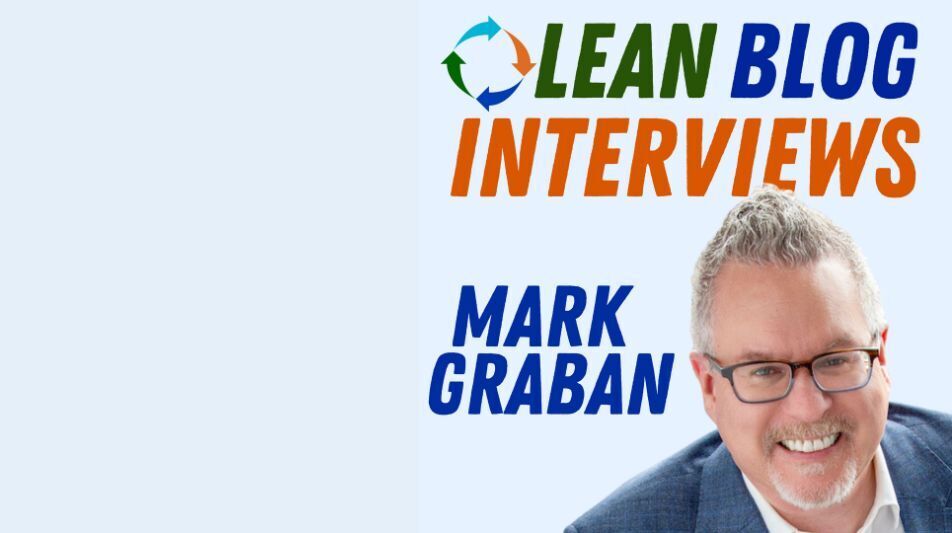
About Mark Graban
Mark Graban is an author, speaker, and consultant, whose latest book, The Mistakes That Make Us: Cultivating a Culture of Learning and Innovation, is available now.
He is also the author of the award-winning book Lean Hospitals: Improving Quality, Patient Safety, and Employee Engagement and others, including Measures of Success: React Less, Lead Better, Improve More.
He serves as a consultant through his company, Constancy, Inc, and is also a Senior Advisor for the technology company KaiNexus.
Mark hosts podcasts, including “Lean Blog Interviews” and “My Favorite Mistake.”
Education: B.S. in Industrial Engineering from Northwestern University; M.S. in Mechanical Engineering, and M.B.A. from the Massachusetts Institute of Technology’s Leaders for Global Operations Program.