Lean Blog Interviews: Real-World Lean Leadership Conversations in Healthcare and Beyond
Lean Blog Interviews: Real-World Lean Leadership Conversations features thoughtful, in-depth discussions with leaders, authors, executives, and practitioners who are applying Lean thinking in the real world.
Hosted by Mark Graban—author of Lean Hospitals, Measures of Success, and The Mistakes That Make Us—the podcast explores Lean as a management system, a leadership philosophy, and a people-centered approach to continuous improvement.
Episodes span healthcare, manufacturing, startups, technology, and professional services. Guests share candid stories about what actually works—and what doesn’t—when organizations try to improve.
This is not a podcast about chasing tools, jargon, or “Lean theater.” Instead, you’ll hear honest conversations about leadership behaviors, culture, psychological safety, learning from mistakes, and building systems that help people do their best work.
If you believe improvement starts with respect for people—and that better systems beat blaming individuals—this podcast is for you.
Find show notes and all episodes at LeanCast.org.
Learn more about Mark Graban at MarkGraban.com.
Listen on:








Episodes

Wednesday Feb 10, 2021
Wednesday Feb 10, 2021
Author of the newly-updated book, available now.
Show notes and more: http://www.leanblog.org/400
Wow, 400 Episodes!! 400 episodes in roughly 15.5 years… that's about 800 weeks, or one episode every two weeks, on average, over that time. Thanks again to the late Norm Bodek for the idea to get this podcast started, as I talk about in this memorial video. Thanks to everybody who has listened or participated as a guest!!
My guest for Episode #400 is Jeffrey Liker, the retired University of Michigan professor who has recently released the second updated and revised version of his seminal book The Toyota Way: 14 Management Principles from the World's Greatest Manufacturer. The new edition has more examples from the service sector, including healthcare, and it incorporates “Toyota Kata” approaches (and he credits his former student Mike Rother).
Today, we talk about why he wrote a new edition and what he's learned since the publication of the original back in 2004. We talk about combining the perspectives of industrial engineering and sociology — the mechanistic vs. the organic views of a system like Lean/TPS. What is “coercive bureaucracy” vs. “enabling bureaucracy”? What's the difference between “being Toyota” and “emulating Toyota”?
We also learn a little bit about the musical instrument that Jeff has started playing again. We need to form a Lean band! Maybe not.
The podcast is sponsored by Stiles Associates, now in their 30th year of business. They are the go-to Lean recruiting firm serving the manufacturing, private equity and healthcare industries. Learn more.
This podcast is part of the #LeanCommunicators network.
Jeff was previously a guest on episodes 3, 4, 37, 39, 41, and 111
Tuesday Feb 02, 2021
Tuesday Feb 02, 2021
Lesa is the founder of Lesa Nichols Consulting.
Show notes: http://www.leanblog.org/399
My guest for Episode #399 of the Lean Blog Interviews podcast is Lesa Nichols, a former Toyota and TSSC employer who now works with organizations through her company, Lesa Nichols Consulting.
Today, Lesa shares reflections on working closely with the late Hajime Oba. This is the third podcast in a mini series, following my conversations with Steve Spear and with Hide Oba.
In the episode, we talk about topics including:
Lisa's non-traditional path to TPS: From public relations to the shop floor
Working with plant president (and future company chairman) Fujio Cho
Choosing between being a "technical scientist" or a "social scientist" of TPS
Meeting Mr. Oba and working with TSSC
Helping find American expertise to learn from
Becoming a powertrain production manager
Key lessons from working with Mr. Oba:
"Managers must fight to have floor time"
"Safety is an assumed thing?" -- what does this mean?
Don't look for waste, look for overburden (both physical and mental)
Why is openly admitting mistakes such an important thing at Toyota
Why Toyota's "soul is around manufacturing"
Lesa was also a contributor of a chapter to the anthology book Practicing Lean.
The podcast is sponsored by Stiles Associates, now in their 30th year of business. They are the go-to Lean recruiting firm serving the manufacturing, private equity and healthcare industries. Learn more.
Wednesday Jan 27, 2021
Wednesday Jan 27, 2021
Co-founders of the firm Integris Performance Advisors
Show notes: https://www.leanblog.org/398
My guest for Episode #398 of the Lean Blog Interviews podcast are Brett M. Cooper and Evans Kerrigan, both co-founders of the firm Integris Performance Advisors. Brett is the President and Evans is the CEO.
They are co-authors of a book with a provocative title: Solving the People Problem: Essential Skills You Need to Lead and Succeed in Today's Workplace.
When I first heard about the book, I challenged them a bit on the title — is this really a “people problem” or a “systemic problem”? We have a really good conversation about all of that today and they ask a question that resonated with me: “The problem begins with you?” meaning that leaders have to go first…
You can learn more via the book's website or Amazon.
In the episode, we talk about the DISC-EQ model of emotional intelligence and you can take a free personal assessment via their website, use code LEANBLOG.
They also answer questions including:
Why do you say “leadership is a relationship?”
What are the “essential skills” that leaders need, at a high level?
What's “the right kind of disagreement” in a workplace?
The podcast is sponsored by Stiles Associates, now in their 30th year of business. They are the go-to Lean recruiting firm serving the manufacturing, private equity and healthcare industries. Learn more.
Wednesday Jan 20, 2021
Wednesday Jan 20, 2021
TPS / Lean Consultant based in NYC
https://www.leanblog.org/397
Joining me for Episode #397 is Hide Oba. His father was the late Hajime Oba, famous for his work at Toyota and the TSSC, as Steve Spear and I discussed back in Episode #386.
Hide worked with his father at TSSC and also worked with him through the company H&M Operations Management, LLC. He is based in New York City. He says that his mission is to continue spreading his father's wisdom and I appreciate him doing so here with me on the podcast.
I asked Hide to summarize his father's life and work and he then talks about some of the unique aspects of his approach.
“Going to the shop floor was fun… his hobby.”
Hide tells a story about his father telling Bruce Hamilton, “You should do Kaizen, too,” and you can read Bruce's side of the story here.
We discuss the balance between asking questions versus pointing people in a direction. Hide says Hajime “never asked people what they should do,” but he asked questions based on his vision.
Hajime saw TPS as “management engineering” — being very scientific about creating the right structure that allows you to create a kaizen culture. Hajime was also “careful” about the word “scientific” as it is meant to mean “continuous discovery and learning… understanding why.” Hide says his father was “addicted to learning.” Hajime aimed to always learn from the client.
From the new 2nd edition of The Toyota Way (an interview with Jeff Liker about that is coming soon, by the way):
“Oba said “TPS is built on the scientific way of thinking… How do I respond to this problem? Not a toolbox. You have to be willing to start small, learn through trial and error.”
Hide also talks about how his father visited hospitals in Pittsburgh via Kent Bowen and Paul O'Neill.
We also talk about why others have struggled to copy or emulate Toyota. “Stick to Ohno,” says Hide. Solve problems one at at instead of having a big program. He “never asked a company to start by creating a Lean / CI office, sitting and making presentations.” Hajime said the plant manager is the key person, and he would say,
“Come with me and let's go through the process together.”
Why does the idea of “challenge” not mean “asking people to do things that are impossible?” Why did he “hate giving a format for problem solving?”
We discuss all of that and the idea of “respect for people.” Hide says he father taught that we should “respect humanity” — human life is limited and we shouldn't waste it… that's why we do kaizen. He also “saw a lot of waste in his final days” in the hospital.
I'm very thankful that Hide can keep his father's work and legacy alive for all of us.
The podcast is sponsored by Stiles Associates, now in their 30th year of business. They are the go-to Lean recruiting firm serving the manufacturing, private equity and healthcare industries. Learn more.
Wednesday Jan 13, 2021
Wednesday Jan 13, 2021
Consultant, author of a newly-released Lean book
Show notes: https://www.leanblog.org/396
My guest for Episode #396 is Patrick Adams, the author of the new book (released as a paperback today!), titled Avoiding the Continuous Appearance Trap: 12 Questions to Understand What's Truly Underneath Your Culture. You can learn more about the book at avoidcontinuousappearance.com.
Patrick is CEO / Executive Lean Coach with his firm Patrick Adams Consulting Services and host of the Lean Solutions Podcast (and he had me as his guest last year). Patrick served in the United States Marine Corps for 8 years before he was injured and medically retired. He received his Bachelor of Science from Eastern Michigan University and also holds a Master of Business Administration. He's also a Six Sigma Black Belt.
In today's episode, Patrick talks about how he got introduced to Lean and connections to McDonald's (and the movie “The Founder“). He then talks about his early experiences as a production supervisor in a plastics plant and an auto supplier. We talk about leadership concepts (including servant leadership) that he learned in the military and we learn the story behind the book and why he wrote it.
Friday Dec 11, 2020
Friday Dec 11, 2020
Norman passed away on December 10, 2020
http://www.leanblog.org/rememberingnorman
I'm republishing a "remastered" and commemorative version of Episode 1 of this podcast series from 2006.
I was incredibly saddened yesterday to hear that Norman Bodek passed away this week. Norman was 88.
This was announced through an email from Norman's company, PCS Press.
Norman Bodek, famed as “the Godfather of Lean”, inducted into Industry Week's and American Manufacturing's Hall of Fame, published over 250 management books, taught at Portland State University, and created the Shingo Prize at Utah State University. He recently wrote “Leader's guide for social responsibility” and this week published CEO Coaching by Kazuyoshi Hisano.
We should all be so fortunate as to be as energetic as Norman was in his 80s. He was an enthusiastic teacher and mentor, but he also had a hunger for learning that was impressive and inspiring.
He suggested that we do an “audio interview” series… that became this podcast and he was the first guest. He was the second guest… in fact, he appeared 14 times.
I’ve written some additional reflections — you can find those, share your own, and find links to all of his past episodes by going to leanblog.org/rememberingnorman
Republishing episode 1… remastered a bit. Boy, the audio quality wasn’t as good back in 2006… I enjoyed re-listening to this the other day. I hope you will too.
Wednesday Dec 02, 2020
Wednesday Dec 02, 2020
Lean practitioner, industrial engineer, and consultant
https://www.leanblog.org/395
My guest for Episode #395 is Michael Parent. He is Managing Director of his firm Right Brain Consulting and he is a Lean Six Sigma Black Belt with the AAA Auto Club Group. Michael has a BS in Industrial and Operations Engineering from the University of Michigan and an MBA from William & Mary. Michael and I are both from the same home town, by the way -- Livonia, Michigan.
In today's episode, Michael first shares what he learned working for Bridgestone, a "typical Japanese company, " as he puts it. He learned, among other things, that "culture is everything."
We then talk about the LSS project that he led in HR and Talent Acquisition for the AAA Auto Club Group. What was the problem statement? "Time to fill" a position. What was the approach for the project? Who was involved and how? What was Michael's role as a facilitator? What was learned about the current state and variation in the work? How were the results and benefits determined? And, what were his lessons learned from this work?
His case study is available to read through iSixSigma.com.
https://www.isixsigma.com/implementation/case-studies/case-study-streamlining-a-hiring-process/
Tuesday Nov 24, 2020
Tuesday Nov 24, 2020
Nine short discussions with other podcasters
https://www.leanblog.org/394
Today's episode, #394, is a little different. I have nine different guests today... not all at once, but sequentially in today's episode.
Many people have started podcasts (or similar projects) during the pandemic. I've started two (Habitual Excellence and My Favorite Mistake) in addition to this series that's about to hit its 15th birthday).
Some of my guests today started a podcast during the pandemic... some of them were already going. Most of them are doing podcasts related to Lean (and one is a college buddy who has an HR podcast). We've all been part of a formal networking group recently that we call "Lean Communicators." I have experiences to share with them, but I'm also looking to learn from what they're learning as they get started -- what new ideas or best practices was I missing?
I talk with each guest about why they started their podcast or video series, what they've learned, and more.
My guests and their projects are (in order of appearance):
Guest
Podcast or Project
Bella Englebach
The Edges of Lean
Jon Thurmond
The #HRSocialHour Half Hour
Brian Buck
People, Purpose and Profits Business Coaching Podcast (and YouTube)
Jamie V. Parker
Lean Leadership For Ops Managers
Brion Hurley
Lean Six Sigma Bursts and Lean Six Sigma for Good
Deondra Wardelle
High Five Fridays (and more to come)
Paul Critchley
The New England Lean Podcast
Sam Morgan
90 Second Purpose and C.I. in 5 (YouTube)
Patrick Adams
The Lean Solutions Podcast
Tuesday Nov 17, 2020
Tuesday Nov 17, 2020
Speaker, consultant, and coach in the world of software
https://www.leanblog.org/393
Joining me for Episode #393 of the podcast is Woody Zuill, who does "Mob Programming workshops, talks and presentations on agile topics," and "coaches and guides folks interested in creating a wonderful workplace where people can excel in their work, and in their life."
I had a chance to meet Woody last year when I saw him speak at an Agile conference and I really enjoyed his perspectives. Woody has also participated quite a bit in a "Lean Consultants Stuck at Home" group that I had organized earlier in the pandemic times.
Topics today include "flow" in software development, the difference between "mob programming" and "paired programming," and the "no estimates movement" and why that is important. I hope you'll find this interesting even if you don't work in software.
Wednesday Nov 11, 2020
Wednesday Nov 11, 2020
Lean consultant and contributor to "Practicing Lean"
http://www.leanblog.org/392
Joining me for Episode #392 is Mike Leigh, the President of his firm OpX Solutions, LLC. Mike was one of the contributors, writing a chapter for our anthology book Practicing Lean.
Some highlights from Mike's career, from his bio:
Began his career as an officer in the US Navy in the late ‘80s, specializing in nuclear propulsion and surface warfare
Mike spent 13 years with General Electric and held various leadership and senior management positions at several different manufacturing sites
During his last five years with GE, Mike was an internal lean consultant and helped over 25 GE factories/suppliers and hundreds of work teams become more productive, reduce costs, and improve their bottom line
Had 45 weeks of training by mentors from Shingijutsu, considered by many as the best Lean consultants in the world
Today, we have a wide-ranging conversation, starting off by talking about the need for leaders to "break down barriers" (and to understand what those barriers really are). What lessons did Mike learn about leadership from the Navy? What leadership behaviors are really problematic? And what are the root causes of those behaviors? We talk about all of this and more.
https://vurbl.com/station/5vxV3TPwDGW/
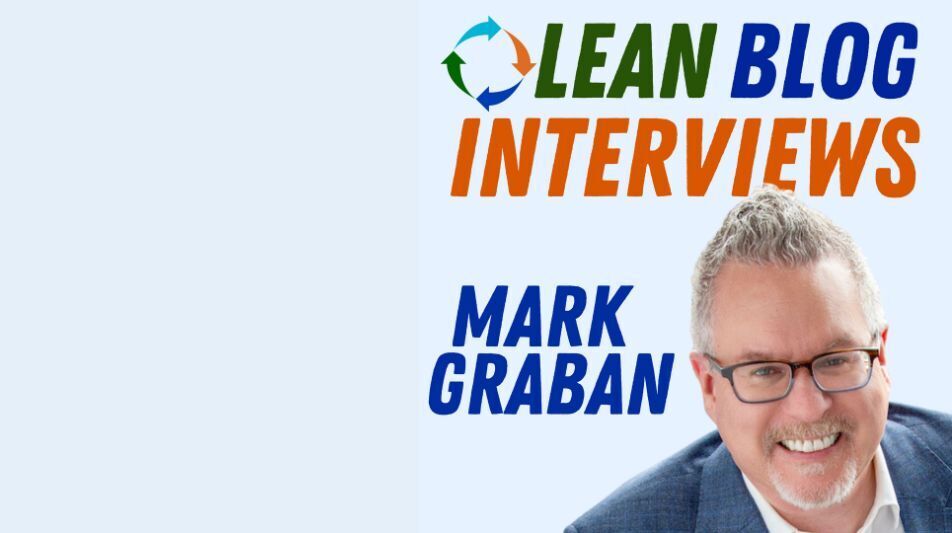
About Mark Graban
Mark Graban is an author, speaker, and consultant, whose latest book, The Mistakes That Make Us: Cultivating a Culture of Learning and Innovation, is available now.
He is also the author of the award-winning book Lean Hospitals: Improving Quality, Patient Safety, and Employee Engagement and others, including Measures of Success: React Less, Lead Better, Improve More.
He serves as a consultant through his company, Constancy, Inc, and is also a Senior Advisor for the technology company KaiNexus.
Mark hosts podcasts, including “Lean Blog Interviews” and “My Favorite Mistake.”
Education: B.S. in Industrial Engineering from Northwestern University; M.S. in Mechanical Engineering, and M.B.A. from the Massachusetts Institute of Technology’s Leaders for Global Operations Program.