Lean Blog Interviews: Real-World Lean Leadership Conversations in Healthcare and Beyond
Lean Blog Interviews: Real-World Lean Leadership Conversations features thoughtful, in-depth discussions with leaders, authors, executives, and practitioners who are applying Lean thinking in the real world.
Hosted by Mark Graban—author of Lean Hospitals, Measures of Success, and The Mistakes That Make Us—the podcast explores Lean as a management system, a leadership philosophy, and a people-centered approach to continuous improvement.
Episodes span healthcare, manufacturing, startups, technology, and professional services. Guests share candid stories about what actually works—and what doesn’t—when organizations try to improve.
This is not a podcast about chasing tools, jargon, or “Lean theater.” Instead, you’ll hear honest conversations about leadership behaviors, culture, psychological safety, learning from mistakes, and building systems that help people do their best work.
If you believe improvement starts with respect for people—and that better systems beat blaming individuals—this podcast is for you.
Find show notes and all episodes at LeanCast.org.
Learn more about Mark Graban at MarkGraban.com.
Listen on:








Episodes

Sunday Jun 22, 2014
Sunday Jun 22, 2014
My guest for Episode #203 (and for Part 2 of our discussion in episode #207) is Chris Jerry, founder of The Emily Jerry Foundation. The foundation was created in the aftermath of the tragic death of his daughter, Emily – a preventable medical error caused by a number of factors and bad systems. You can read Emily's story here.
I first learned about this tragedy a few years back and I blogged about it:
“A Pharmacist's Jail Cell Interview – What Good Does Blame Do?”
Some people ask, “Why are you defending a pharmacist who screwed up and killed a sweet little girl?” The main victims were, of course, Emily and her family. That doesn't mean that a simplistic response of punishing and jailing one person will do anything to protect other patients in the future… and Chris Jerry agrees with that view.
I saw Chris speak at a conference earlier this year and we finally found an opportunity to record a podcast after talking about this for a few years off and on. The story is powerful and I admire Chris for his work and advocacy to help others — as a way of honoring Emily and her life and memory.
In this first part, Chris tells the story of what happened. Again, also check out Part 2, which was released later.
For a link to this episode, refer people to www.leanblog.org/203.
For earlier episodes of my podcast, visit the main Podcast page, which includes information on how to subscribe via RSS or via Apple Podcasts. You can also listen via Stitcher.
Thursday Jun 12, 2014
Thursday Jun 12, 2014
My guest today for Episode 202 is Patrick Graupp, co-author of the excellent book Getting to Standard Work in Health Care: Using TWI to Create a Foundation for Quality Care, co-authored with Martha Purrier from Virginia Mason Medical Center. If you're brand new to the Training Within Industry (TWI) model, you might want to first listen to Episode 196, with Jim Huntzinger, on “What is TWI?“
Patrick is also a senior master trainer with the TWI Institute. His other publications include the book The TWI Workbook: Essential Skills for Supervisors, a Shingo Research and Professional Publication Prize Recipient for 2007 and Implementing TWI: Creating and Managing a Skills-Based Culture which was published by Productivity Press.
In the episode, we discuss topics including:
How often do you meet Lean practitioners who don't know about TWI?
What are some of the challenges that hospitals address using TWI?
How did Virginia Mason get introduced to these concepts?
How has TWI helped in healthcare?
About the TWI Institute and Patrick's work
For a link to this episode, refer people to www.leanblog.org/202.
For earlier episodes of my podcast, visit the main Podcast page, which includes information on how to subscribe via RSS or via Apple Podcasts. You can also listen via Stitcher.
More info and links related to this podcast:
Previous podcasts on TWI:
#196: (3/18/14) Jim Huntzinger, What is TWI?
#104: (11/23/10) Dr. Peter Patterson, Lean in Histopathology
#28: (7/29/07) Norman Bodek, on Training Within Industry and more
#15: (1/7/07) Jim Huntzinger about the “Training Within Industry” program
Other Related References & Links:
Podcast #31 on “Toyota Talent”
My article on “Training Within Healthcare“
A longer overview presentation about TWI
Friday Jun 06, 2014
Friday Jun 06, 2014
Joining me for episode #201 are Ron Smith, a Process Improvement Coordinator/Lean Facilitator at Mary Greeley Medical Center (in Iowa) and Suz Kaprich, a consultant with KaiNexus (disclosure: I'm on the management team of KaiNexus and have an ownership stake in the company).
Today, they are talking about a three-month “WorkOut” process that Ron and Suz ran recently at the hospital. Given the challenges in today's healthcare environment, the focus was on cost reduction and financial benefits, but they of course made improvements to the timeliness and quality of patient care, as well. The total financial impact, validated by finance, was about $800,000 in that time. The goal was not just to drive short-term improvements, but to also demonstrate how improvement was possible… to help spark a culture of ongoing continuous improvement.
Through the course of the WorkOut, Mary Greeley Medical Center used the KaiNexus web-based continuous improvement platform to facilitate and track their improvements and results and they remain a customer of KaiNexus for their ongoing improvement efforts.
For a link to this episode, refer people to www.leanblog.org/201.
For earlier episodes of my podcast, visit the main Podcast page, which includes information on how to subscribe via RSS or via Apple Podcasts. You can also listen via Stitcher.
Friday May 30, 2014
Friday May 30, 2014
My guest for episode 200 is Paul Spiegelman, author of the book Patients Come Second: Leading Change by Changing the Way You Lead. Today, we're talking about his book and its provocative title – what do you mean patients don't come first? What about this trend for “patient-centered care” (and why wasn't it patient-centered to begin with?).
In the podcast, Paul talks about:
The book's title and how it was meant to be provocative
Why focusing on engaged employees leads to better patient care and more success for the organization
How do we create engagement?
Why is it important to connect things to purpose and values?
Why is being vulnerable important and why is that the sign of a strong leader?
And more….
For a link to this episode, refer people to www.leanblog.org/200.
For earlier episodes of my podcast, visit the main Podcast page, which includes information on how to subscribe via RSS or via Apple Podcasts. You can also listen via Stitcher.
About Paul:
Paul Spiegelman is Chief Culture Officer of Stericycle, a NASDAQ listed global services organization with 13,000 employees and is the Founder of BerylHealth and The Beryl Institute. Paul also co-founded the Inc. Small Giants Community, an organization that brings together leaders who are focused on values-based business principles.
As the former CEO of BerylHealth, Paul led a unique, people-centric culture for a company that won nine “best place to work” awards, including the #2 Best Medium Sized Company to Work for in America. Paul was honored with the Ernst & Young 2010 Entrepreneur of the Year award.
Paul is a sought-after speaker and author on leadership, employee engagement, entrepreneurship, corporate culture, and customer relationships. He makes frequent radio and TV appearances and writes columns on culture for Inc. Magazine and the Dallas Business Journal. He's written several books on employee engagement and is the New York Times best-selling author of Patients Come Second: Leading Change by Changing the Way you Lead.
Paul practiced law for two years prior to founding BerylHealth. He holds a bachelor's degree in history from UCLA and a law degree from Southwestern University.
Friday May 23, 2014
Friday May 23, 2014
Joining me for episode #199 is Jeff Gothelf (@jboogie), talking about “Lean UX” or “Lean User Experience,” a key method for software development, usually used in conjunction with design thinking, agile development, and Lean Startup business practices. Jeff is author of the book Lean UX: Applying Lean Principles to Improve User Experience and he is Managing Director at Neo, the global product innovation company.
Jeff is teaching a workshop in Austin on June 10 called “Lean UX Bootcamp: Agility through cross-functional collaboration.”
I barely know anything about LeanUX, but have chatted with Jeff before and read the first few chapters of his book… but my role here is to just ask questions…
Jeff will explain Lean UX to us today. I'm taken by the parallels between Lean UX (along with Lean Startup) and more general “Lean,” as I know it in manufacturing and healthcare. It's about deeply understand the customer and their needs, forming hypotheses, and iterating in an experimental and data-driven way… a departure from the old way of the designer “knowing” what the customer wants or a software company writing a huge specification document (about “half of which never got used,” says Jeff).
Lean UX designers are problem solvers, they “get out of the building,” and they get their designs (or even just sketches) in front of customers to get feedback early and often. It's better to do small, inexpensive tests of change… if you're going to fail, better to fail early and fail often… and we'll be more successful as a result. That's good solid Lean thinking and Kaizen thinking. Read more about Jeff via:
His bio
His blog
For a link to this episode, refer people to www.leanblog.org/199.
For earlier episodes of my podcast, visit the main Podcast page, which includes information on how to subscribe via RSS or via Apple Podcasts.
Thursday May 15, 2014
Thursday May 15, 2014
Episode #198 is a discussion with Harry Kenworthy about his work bringing Lean into local and state governments. We had a great conversation that touches on the influence of Dr. W. Edwards Deming and many other concepts that might be of interest even if you're not interested in “Lean Government” and the work happening there.
Harry is Principal and Manager of the Quality and Productivity Improvement Center (QPIC, LLC), a consulting organization he founded in 1984 and has been with full time since 2004. He worked with Dr. Deming in 1983-85 on a series of 2 day seminars throughout the US, sponsored by MIT. He has spoken at over 90 conferences on quality, productivity, Lean, and Six Sigma, and has been published several magazines including Quality Progress and Purchasing. He also had working relationships with Dr. Joseph Juran and Dorian Shainin.
He was one of the first practitioners to apply LEAN in the Government sector in the mid-90s.
Here is an article by Harry, shared with permission (PDF link): Getting Started on a Lean Government Journey
Harry was also a Malcolm Baldrige National Quality Award Examiner from 1989-1991, a licensed Professional Engineer and a Certified Quality Engineer.He worked at a NYSE listed, global manufacturer, for 26 years in a variety of capacities: Operations Manager, Division Manager, Group VP and, for his last 3 years, as Corporate VP, Manufacturing. He was the Executive Lean Six Sigma (LSS) Champion: leading the LSS effort and developing the LSS training program, which incorporated the best of traditional Six Sigma (DMAIC), Lean, and a series of Specialized Problem Solving Techniques. He provided LSS training in the US, Europe, Japan and China. For 9 years, he was on the Board of Directors of a Japanese Joint Venture based in Nagoya, Japan. The JV was a key supplier to Toyota and Harry was able to learn about Lean through Toyota. He also had a long term relationship with JUSE (Japanese Union of Scientists and Engineers) which administered the Deming Prize in Japan and had the honor of visiting several Deming Prize-winning companies.Harry holds a Bachelor of Science degree in Materials Engineering from Rensselaer Polytechnic Institute and an MBA in Finance from Syracuse University.
For a link to this episode, refer people to www.leanblog.org/198.
For earlier episodes of my podcast, visit the main Podcast page, which includes information on how to subscribe via RSS or via Apple Podcasts. You can also listen via Stitcher.
Podcasts Sponsored by KaiNexus
Monday Apr 28, 2014
Monday Apr 28, 2014
My guest for episode #197 is a hospital leader I really respect, Kim Barnas, author of the new book Beyond Heroes.
Until very recently, Kim was a Senior VP at ThedaCare, leading Appleton Medical Center and Theda Clark Hospital. I've seen Kim speak to groups at ThedaCare and a few conferences and she has a lot to teach us about Lean leadership, using her stories and experiences in a way that's very powerful. I hope you'll check out the book. Read a press release about it here.
In the podcast today, we talk about topics including her initial reactions to Lean when first introduced to it as a hospital leader, why “heroes” are overrated and sometimes create “chaos” in healthcare, and the importance of moving beyond tools and projects to a Lean culture and management system.
2018 Update: What's Going on at ThedaCare?
Kim talks about the need to “create more value” (not just reduce waste), saying “just trying to do more with less makes no sense – you need a plan.” We also talk about programs like GM's “Speak up for Safety,” where she says that speaking up “needs to be a conversation, not a reporting” transaction.
For a link to this episode, refer people to www.leanblog.org/197.
For earlier episodes of my podcast, visit the main Podcast page, which includes information on how to subscribe via RSS or via Apple Podcasts.
Monday Mar 17, 2014
Monday Mar 17, 2014
My guest for episode 196 is Jim Huntzinger, founder of Lean Frontiers. Today, we're talking about the Training Within Industry methodology and his new website WhatIsTWI.com.
We are discussing topics including what a typical TWI “journey” looks like for an organization, how TWI is such a fundamental Lean concept/method, and some examples of how TWI is helping organizations in various industries, including healthcare. What's the latest in the seven years since our first podcast on this topic?
For a link to this episode, refer people to www.leanblog.org/196.
Previous podcasts and related links:
#8: (10/31/06) Jim Huntzinger, Founder of the Lean Accounting Summit
#15: (1/7/07) Jim Huntzinger about the “Training Within Industry” program
#33: (11/17/07) Jim Huntzinger, on the latest Lean Accounting Summit
Training Within Industry: What Rosie the Riveter and IV Med Prep Have in Common
Podcast #104 – Dr. Peter Patterson (@IDrPete), Lean in Histopathology\
Society for Health Systems Talk on TWI
For earlier episodes of my podcast, visit the main Podcast page, which includes information on how to subscribe via RSS or via Apple Podcasts.
Podcasts Sponsored by KaiNexus
Sunday Mar 02, 2014
Sunday Mar 02, 2014
Joining me for episode #195 is my friend Steve Montague from LifeWings. Steve and I met initially through our shared interest in Lean and, like Ron Pereira, we discovered we both lived in Keller, Texas (I've since moved to San Antonio). Steve is a retired Navy pilot and currently flies for a major commercial airline. He's also been involved, through LifeWings, in the movement to bring aviation safety practices (and culture) to healthcare via "Crew Resource Management" or "TeamSTEPPS." He's also been on the forefront of combining Lean and TeamSTEPPS, something we both agree is a great idea. In honor of National Patient Safety Awareness Week, we talk about topics including: - Steve's background with CRM in aviation and healthcare - Why CRM isn't just about checklists, but also learning how to "communicate more assertively" in the cockpit or operating room... - How Lean and CRM / TeamSTEPPS fit together conceptually - How standardization and iterative improvement fit together There's so much we could talk about, so we barely scratched the surface on this topic. If you have questions, we can do another podcast. Please post them as comments on this post. For a link to this episode, refer people to www.leanblog.org/195 -- go there for some links and material that Mark wrote to share with the listeners (and he'll have a guest post soon that expands on the thoughts in the podcast). Please leave a comment and join the discussion about the podcast by visiting the blog page for this episode. For earlier episodes of the Lean Blog Podcast, visit the main Podcast page at www.leanpodcast.org, which includes information on how to subscribe via RSS or via Apple iTunes. You can also listen to streaming episodes of the podcast via Stitcher: http://landing.stitcher.com/?vurl=leanblog If you have feedback on the podcast, or any questions for me or my guests, you can email me at leanpodcast@gmail.com or you can call and leave a voicemail by calling the "Lean Line" at (817) 776-LEAN (817-776-5326) or contact me via Skype id "mgraban". Please give your location and your first name. Any comments (email or voicemail) might be used in follow ups to the podcast.
Thursday Feb 20, 2014
Thursday Feb 20, 2014
My guest for episode #194 is Paul Piechota, Director for the Center for Competitive Change at the University of Dayton School of Engineering. Piechota has authored over 30 publications with such titles as Transforming the Enterprise, Getting to the Future First!, and Establishing a Method for Process and Culture Change in the Military. His most recent publication is the book titled, Keeping Your Business in the U.S.A.: Profit Globally While Operating Locally. In this episode, we'll talk about topics including how the university is using Lean and Six Sigma to improve their own operations, how they are getting students involved, and their attempts to engage professors to improve their work in the classroom. This all follows up a blog post I wrote about their press release on this topic. For a link to this episode, refer people to www.leanblog.org/194 -- go there for some links and material that Mark wrote to share with the listeners (and he'll have a guest post soon that expands on the thoughts in the podcast). Please leave a comment and join the discussion about the podcast by visiting the blog page for this episode. For earlier episodes of the Lean Blog Podcast, visit the main Podcast page at www.leanpodcast.org, which includes information on how to subscribe via RSS or via Apple iTunes. You can also listen to streaming episodes of the podcast via Stitcher: http://landing.stitcher.com/?vurl=leanblog If you have feedback on the podcast, or any questions for me or my guests, you can email me at leanpodcast@gmail.com or you can call and leave a voicemail by calling the "Lean Line" at (817) 776-LEAN (817-776-5326) or contact me via Skype id "mgraban". Please give your location and your first name. Any comments (email or voicemail) might be used in follow ups to the podcast.
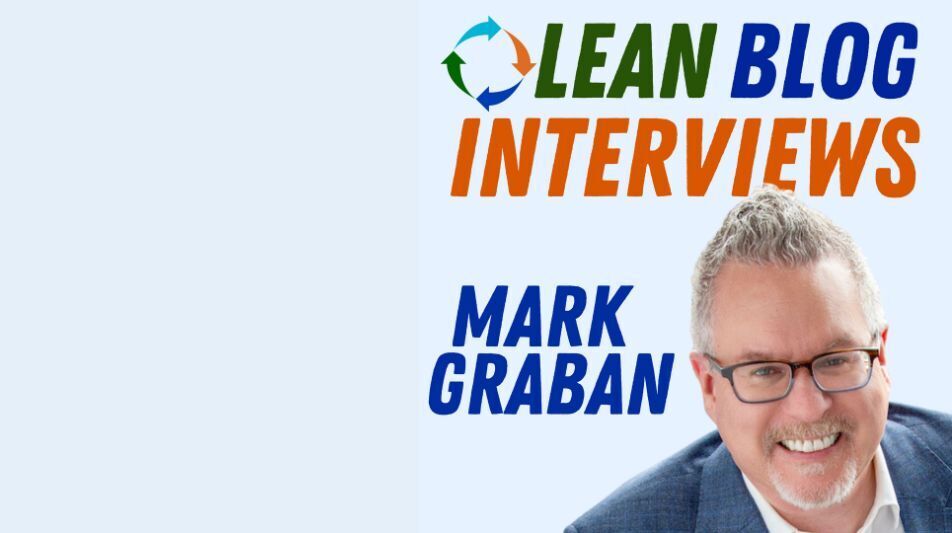
About Mark Graban
Mark Graban is an author, speaker, and consultant, whose latest book, The Mistakes That Make Us: Cultivating a Culture of Learning and Innovation, is available now.
He is also the author of the award-winning book Lean Hospitals: Improving Quality, Patient Safety, and Employee Engagement and others, including Measures of Success: React Less, Lead Better, Improve More.
He serves as a consultant through his company, Constancy, Inc, and is also a Senior Advisor for the technology company KaiNexus.
Mark hosts podcasts, including “Lean Blog Interviews” and “My Favorite Mistake.”
Education: B.S. in Industrial Engineering from Northwestern University; M.S. in Mechanical Engineering, and M.B.A. from the Massachusetts Institute of Technology’s Leaders for Global Operations Program.