Lean Blog Interviews: Real-World Lean Leadership Conversations in Healthcare and Beyond
Lean Blog Interviews: Real-World Lean Leadership Conversations features thoughtful, in-depth discussions with leaders, authors, executives, and practitioners who are applying Lean thinking in the real world.
Hosted by Mark Graban—author of Lean Hospitals, Measures of Success, and The Mistakes That Make Us—the podcast explores Lean as a management system, a leadership philosophy, and a people-centered approach to continuous improvement.
Episodes span healthcare, manufacturing, startups, technology, and professional services. Guests share candid stories about what actually works—and what doesn’t—when organizations try to improve.
This is not a podcast about chasing tools, jargon, or “Lean theater.” Instead, you’ll hear honest conversations about leadership behaviors, culture, psychological safety, learning from mistakes, and building systems that help people do their best work.
If you believe improvement starts with respect for people—and that better systems beat blaming individuals—this podcast is for you.
Find show notes and all episodes at LeanCast.org.
Learn more about Mark Graban at MarkGraban.com.
Listen on:








Episodes

Wednesday Feb 05, 2014
Wednesday Feb 05, 2014
My guest for episode #193 is Mark Jaben, MD, talking about our brains, Lean, and change. Mark has been a guest blogger for me before and it's great to talk to him today about his research and experiences. In our conversation, Mark talks about "the troublesome features of our brain's operating system" (such as our "hidden brain"), how the A3 problem solving process fits with the way our brains work, and how to deal with "resistance" to change. Mark has also helped talk to some healthcare organizations about KaiNexus and we both presented at a conference last year. For a link to this episode, refer people to www.leanblog.org/193 -- go there for some links and material that Mark wrote to share with the listeners (and he'll have a guest post soon that expands on the thoughts in the podcast). Please leave a comment and join the discussion about the podcast by visiting the blog page for this episode. For earlier episodes of the Lean Blog Podcast, visit the main Podcast page at www.leanpodcast.org, which includes information on how to subscribe via RSS or via Apple iTunes. You can also listen to streaming episodes of the podcast via Stitcher: http://landing.stitcher.com/?vurl=leanblog If you have feedback on the podcast, or any questions for me or my guests, you can email me at leanpodcast@gmail.com or you can call and leave a voicemail by calling the "Lean Line" at (817) 776-LEAN (817-776-5326) or contact me via Skype id "mgraban". Please give your location and your first name. Any comments (email or voicemail) might be used in follow ups to the podcast.
Sunday Jan 26, 2014
Sunday Jan 26, 2014
Joining me for podcast #192 is John Torinus, author of the excellent book, The Company That Solved Health Care: How Serigraph Dramatically Reduced Skyrocketing Costs While Providing Better Care, and How Every Company Can Do the Same. John is the chairman of Wisconsin-based Serigraph Inc., a graphics parts manufacturer with ownership in ten plants in the U.S., Mexico, China and India with over $130M in annual sales. John has served as business editor and columnist at the Milwaukee Journal Sentinel.
John is collaborating with the ThedaCare Center for Healthcare Value for a new workshop: “Solving the Employer Healthcare Crisis,” to be held in Phoenix on January 28 (and hopefully again in the future).
In this episode, we talk about how Serigraph has kept healthcare costs under control while improving the health of their employees. How do concepts of consumer choice, data transparency, and focusing on preventive care help to “engage all employees in the healthcare challenge”? For example, 90% of their diabetic employees have their disease “under control” as compared to about 30% nationally. What is this “grass roots revolution” in healthcare?
For a link to this episode, refer people to www.leanblog.org/192.
For earlier episodes of my podcast, visit the main Podcast page, which includes information on how to subscribe via RSS or via Apple Podcasts.
Podcasts Sponsored by KaiNexus
Monday Jan 13, 2014
Monday Jan 13, 2014
Joining me for podcast #191 is my friend and fellow LEI faculty member Mike Orzen (@MikeOrzen), co-author of the Shingo Award-winning book Lean IT: Enabling and Sustaining Your Lean Transformation. I recently crossed paths with Mike in Columbus, Ohio, because we're both mentoring students in the Ohio State University MBOE program. We have a lot in common, it seems!
Mike is also collaborating with the ThedaCare Center for Healthcare Value for a new workshop: “Leveraging Information, People & Systems in Healthcare,” to be held in Phoenix on January 28 and 29.
In this episode, we talk about topics including an overview of “Lean IT,” how Lean is different compared to manufacturing and other service settings, how healthcare organizations can benefit from Lean IT, and the potential for kaizen and continuous improvement in IT.
For a link to this episode, refer people to www.leanblog.org/191.
Mike and I wrote an article in 2011 on using Lean to meet the IHI “Triple Aim” goals in healthcare (PDF link).
For earlier episodes of my podcast, visit the main Podcast page, which includes information on how to subscribe via RSS or via Apple Podcasts.
Podcasts Sponsored by KaiNexus
Sunday Jan 05, 2014
Sunday Jan 05, 2014
My guest for episode #190 is a returning guest (from episode #151), my friend Karen Martin, talking about her (co-authored by Mike Osterling) newly-released book, Value Stream Mapping: How to Visualize Work and Align Leadership for Organizational Transformation. You can order via Amazon and can learn more via Karen's website.
In the episode, we talk about topics including how this book fits with her others, some common struggles that people face when mapping value streams, why it's important for senior leaders to be involved with VSM work, how long mapping should take, the publishing value stream, and the use of VSM in different industries. I hope you enjoy the conversation!
For a link to this episode, refer people to www.leanblog.org/190.
Here is the endorsement I gave for the book based on my reading of a pre-publication version of the book:
“Value Stream Mapping is a wise and practical guide that will help you lead transformation efforts in your organization. While some think of value stream mapping as a ‘lean tool,' Martin and Osterling rightly emphasize the strategic value of looking at the big picture and improving your entire value stream from suppliers to the customer and all points in between. The book is full of tips and lessons learned to help you avoid mistakes and maximize the results that you get from the time invested into proper value stream mapping.”
You can read the introduction (PDF) or the executive reading guide (PDF) online.
You can also view webinars Karen has done on this topic:
Value Stream Mapping – Strategy Before Tactics
Value Stream Mapping: How to Visualize Work & Align Leadership for Organizational Transformation
You can also sign up for a new webinar being done tomorrow, Jan 7 2014: Value Stream Analysis: Beyond the Mechanics – Part 1 (Planning)
For earlier episodes of my podcast, visit the main Podcast page, which includes information on how to subscribe via RSS or via Apple Podcasts.
Podcasts Sponsored by KaiNexus
Wednesday Jan 01, 2014
Wednesday Jan 01, 2014
Audio remastered June 2022
Episode page
Joining me as my guest for episode #189 is Rich Sheridan, CEO and Chief Storyteller at Menlo Innovations, a software development company in Ann Arbor, Michigan. Rich is author of the new book that I'm really enjoying: Joy, Inc.: How We Built a Workplace People Love. Learn more about the author and the book at www.menloinnovations.com/joyinc. You can also download a free chapter here.
There's so much to love about his book and what they are doing at Menlo. I think it's great to start a new year, 2014, with a look at a book that gives us hope about creating workplaces where employees are fully engaged and everybody wins – customers, company, and employees. I'll have a chance to visit Menlo in about two weeks when I'll be in Michigan for my public Kaizen workshop, so I'll report back on what I see during that visit.
For a link to this episode, refer people to www.leanblog.org/189.
Some of the topics I was taking notes on as I read the book (through chapter six):
“You can be joyful without being happy all the time”
Menlo has built upon “extreme programming” and Kent Beck‘s work there
Their “Menlo Way” is worth looking at
As Toyota has done, Menlo doesn't mind teaching competitors about their methods (because this serves their mission to reduce suffering in the world, including the suffering in bad workplaces)
They work really hard to break down “towers of knowledge” in the organization
Menlo emphasizes direct customer contact and understanding their problems and what they need (often better than the customers could articulate on their own in a traditional software approach)
Their “high tech anthropology” approach (HTA) starts with understanding customers better and then iterating and testing designs (often starting with crude prototypes and mockups)
Their QA process focuses on reducing delays and shortening lead time (along with other approaches that are different than traditional QA)
A reader will recognize ideas that are similar to Deming, Lean, Lean Startup, Agile, and more… combined into a powerful and cohesive articulation of culture and strategy
Wednesday Dec 18, 2013
Wednesday Dec 18, 2013
My guest for Episode 188 has been a leading voice in the Lean community for 25 years, Daniel T. Jones, founder and chairman of the Lean Enterprise Academy, based in the UK. Dan collaborated with Jim Womack on the books The Machine That Changed the World, Lean Thinking, and Lean Solutions and published other books through the LEA.
Currently, Dan is helping promote Lean in healthcare and government and is learning about the Lean Startup community by becoming an advisor to the company Elastera. He has also recently joined Twitter as @DanielJonesLean. You can also watch recently-released free videos (via Gemba Academy) of Dan, Jim, and John Shook reflecting on 25 years of Lean and other topics. In this episode, we touch on all of these questions and also take a question via Twitter.
For a link to this episode, refer people to www.leanblog.org/188.
For earlier episodes, visit the main Podcast page, which includes information on how to subscribe via RSS or via Apple Podcasts.
Podcasts Sponsored by KaiNexus.
Wednesday Sep 25, 2013
Wednesday Sep 25, 2013
Joining me for episode #187 is Joe Swartz, my friend and esteemed co-author for our books Healthcare Kaizen: Engaging Front-Line Staff in Sustainable Continuous Improvements and The Executive Guide to Healthcare Kaizen: Leadership for a Continuously Learning and Improving Organization. You can learn more about our books here.
Joe is Director of Business Transformation at Franciscan St. Francis Health System in Indianapolis (his full bio is here). In the episode, we talk about his background with Kaizen and how he got into healthcare. Joe discusses how Franciscan got started with Kaizen, some of his favorite Kaizen examples, why it would have taken too long to engage everybody through Lean Six Sigma projects, what they are teaching managers about leading in a Kaizen culture, and the work that still needs to be done in their cultural transformation.
For a link to this episode, refer people to www.leanblog.org/187.
For earlier episodes, visit the main Podcast page, which includes information on how to subscribe via RSS or via Apple Podcasts.
You can also listen via Stitcher.
Podcasts Sponsored by KaiNexus
Wednesday Sep 18, 2013
Wednesday Sep 18, 2013
Episode page
My guest for episode #186 is my friend Jon Miller, CEO of Kaizen Institute and long-time blogger at Gemba Panta Rei. Today, we're talking about his upcoming book, Creating a Kaizen Culture: Align the Organization, Achieve Breakthrough Results, and Sustain the Gains (co-authored by Mike Wroblewski and Jamie Villafuerte). I can't believe I haven't had Jon on the show before… hopefully, this won't be the last time.
In this episode, we'll talk about “artifacts” of a Kaizen culture and why core beliefs, including safety and security, are so important. What are some of the other core beliefs in a Kaizen culture? Why are some of these beliefs and behaviors “not natural Japanese behaviors” and what are the implications for those of us doing this in other countries?
For a link to this episode, refer people to www.leanblog.org/186.
Wednesday Sep 11, 2013
Wednesday Sep 11, 2013
My guests for episode #185 are Karen Dunn Skinner and David Skinner and our topic, for the first time on the Podcast, is Lean in law firms and the legal profession. David and Karen are husband and wife, attorneys, from Quebec, and consultants for their firm Gimbal. I had a chance to meet up with them in Montreal earlier this year, after connecting via social media, and they're a delight to talk to – in person and in our podcast.
I think there are a lot of fascinating parallels between Lean in healthcare and Lean in law. There are opportunities to focus on payment for value instead of activity, big opportunities to reduce waste and errors, and to make sure people are doing the right work for their job level. “The way it's always been” seems very powerful in both professions and the “but we don't make cars” objection can be powerful.
In the episode, we discuss topics including:
How do Lean methods apply in a Law firm?
What are some benefits to the clients and the firm itself?
How do you get past the “we don't build cars” objection?
How widespread is Lean in the legal profession?
How did Karen and David discover Lean (and Six Sigma) as attorneys?
What's the balance between using Lean and/or Six Sigma in law?
How can standardized work and checklists help?
Why are legal clients dissatisfied with the pricing and quality of legal work?
How do you strike a balance between law being an art vs. being a process?
For a link to this episode, refer people to www.leanblog.org/185.
For earlier episodes, visit the main Podcast page, which includes information on how to subscribe via RSS or via Apple Podcasts.
Podcasts Sponsored by KaiNexus
Monday Aug 12, 2013
Monday Aug 12, 2013
It's great to have Dr. John Toussaint back for episode #184 of the podcast (see links to previous episodes below). He is, of course, CEO of the ThedaCare Center for Healthcare Value and the author of two Shingo Award-winning books, On the Mend: Revolutionizing Healthcare to Save Lives and Transform the Industry and Potent Medicine: The Collaborative Cure for Healthcare.
In this podcast, we start by hearing John's thoughts on some of the top issues that healthcare CEOs are facing today, such as changes in payment structures and Accountable Care Organizations. We also talk about the “Enduring Excellence” program that Paul O'Neill and John are leading to teach healthcare senior leaders about Lean culture change and their important role.
This podcast was produced in conjunction with the Healthcare Value Network as a continuation of their previous podcast series.
For a link to this episode, refer people to www.leanblog.org/184.
Past episodes with Dr. Toussaint:
#159: (10/16/12) John Toussaint, MD on the new IOM report
#146: (5/2/12) John Toussaint MD, on his new book Potent Medicine
#72: (8/12/09) John Toussaint, MD, Lean and Health Reform
#62: (2/23/09) John Toussaint, MD, ThedaCare Center for Healthcare Value
#54: (12/2/08) John Toussaint, MD, ThedaCare's Lean Journey
For earlier episodes, visit the main Podcast page, which includes information on how to subscribe via RSS or via Apple Podcasts.
Podcasts Sponsored by KaiNexus
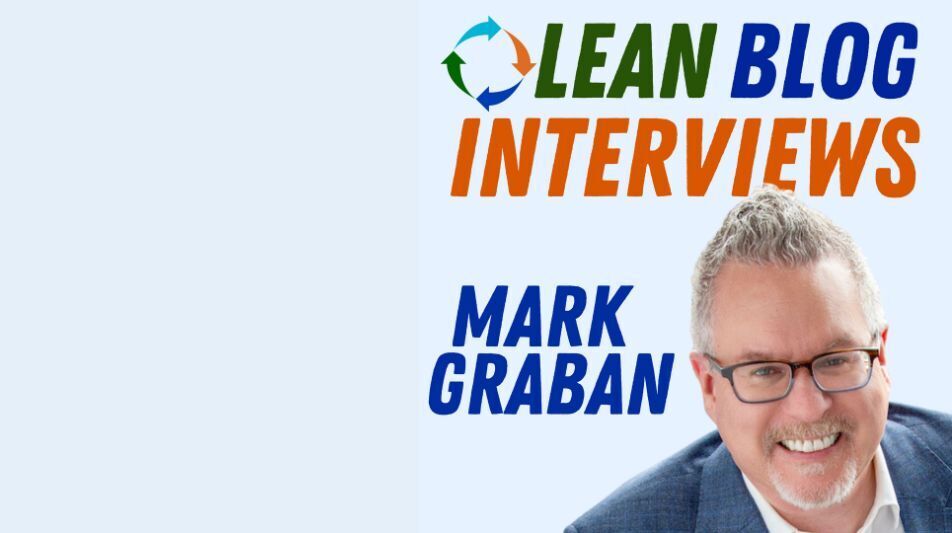
About Mark Graban
Mark Graban is an author, speaker, and consultant, whose latest book, The Mistakes That Make Us: Cultivating a Culture of Learning and Innovation, is available now.
He is also the author of the award-winning book Lean Hospitals: Improving Quality, Patient Safety, and Employee Engagement and others, including Measures of Success: React Less, Lead Better, Improve More.
He serves as a consultant through his company, Constancy, Inc, and is also a Senior Advisor for the technology company KaiNexus.
Mark hosts podcasts, including “Lean Blog Interviews” and “My Favorite Mistake.”
Education: B.S. in Industrial Engineering from Northwestern University; M.S. in Mechanical Engineering, and M.B.A. from the Massachusetts Institute of Technology’s Leaders for Global Operations Program.