Lean Blog Interviews: Real-World Lean Leadership Conversations in Healthcare and Beyond
Lean Blog Interviews: Real-World Lean Leadership Conversations features thoughtful, in-depth discussions with leaders, authors, executives, and practitioners who are applying Lean thinking in the real world.
Hosted by Mark Graban—author of Lean Hospitals, Measures of Success, and The Mistakes That Make Us—the podcast explores Lean as a management system, a leadership philosophy, and a people-centered approach to continuous improvement.
Episodes span healthcare, manufacturing, startups, technology, and professional services. Guests share candid stories about what actually works—and what doesn’t—when organizations try to improve.
This is not a podcast about chasing tools, jargon, or “Lean theater.” Instead, you’ll hear honest conversations about leadership behaviors, culture, psychological safety, learning from mistakes, and building systems that help people do their best work.
If you believe improvement starts with respect for people—and that better systems beat blaming individuals—this podcast is for you.
Find show notes and all episodes at LeanCast.org.
Learn more about Mark Graban at MarkGraban.com.








Episodes

Feb 2, 2009
Feb 2, 2009
16 min
Podcast Episode #60 is the second part of a two-parter with retired Lt. Randy Russell of the Jacksonville Sheriff's Office, an innovator in the use of Lean methods for improving law enforcement (Part 1, Episode #51 is here). In this episode, Randy discusses some really interesting examples of how Lean methods are helpful in law enforcement and how 5S or standardized work can help save a life. Very powerful stuff. Randy’s company, Hyperformance Enterprises, LLC, operates a Lean consulting and training division that can be found online at www.improvementors.com. Randy's interests include waste identification and elimination, process improvement, transactional systems, and strategic alignment. His hands-on experience with Lean in a broad array of settings as the former Chairman of the (47+ member) Jacksonville Lean Consortium and his two decade career as a law enforcement commander and lead security planner for a Super Bowl provides valuable added experience and insights when it comes to dealing with sensitive and complex projects. If you have feedback on the podcast, or any questions for me or my guests, you can email me at leanpodcast@gmail.com or you can call and leave a voicemail by calling the "Lean Line" at (817) 776-LEAN (817-776-5326) or contact me via Skype id "mgraban". Please give your location and your first name. Any comments (email or voicemail) might be used in follow ups to the podcast.
Dec 16, 2008
Dec 16, 2008
28 min
Show notes: https://www.leanblog.org/55
Audio remastered June 2021
Norman Bodek is once again back for episode #55 of the LeanBlog Podcast, talking about his recent trip to Ireland.
If you're a fan of Norman, his books and his podcasts, be sure to check out the special charity auction that's running on www.leanblog.org through December 19. You can get a specially autographed CD set of Norman's previous Podcasts along with an autographed book. You'll see links to the auction on the Lean Blog, so visit today. The auction benefits the Josie King Foundation, a group that supports improvements for patient safety in hospitals and healthcare, a very important cause.
For earlier episodes, visit the main Podcast page, which includes information on how to subscribe via RSS or via Apple Podcasts.
Episode #55 Key Words and Links:
Lean in Ireland
Tony Corrigan
Institute for Lean Systems
If you have feedback on the podcast, or any questions for me or my guests, you can email me at leanpodcast@gmail.com or you can call and leave a voicemail by calling the “Lean Line” at (817) 993-0630 or contact me via Skype id “mgraban”. Please give your location and your first name. Any comments (email or voicemail) might be used in follow ups to the podcast.
Dec 2, 2008
Dec 2, 2008
23 min
Show notes: https://www.leanblog.org/54
Remastered August 2021
Our guest for Episode #54 is John S. Toussaint, MD, the CEO emeritus of ThedaCare, and CEO of the ThedaCare Center for Healthcare Value. Dr. Toussaint is very well known for his leadership of the Lean efforts in the ThedaCare system, done under the heading of the ThedaCare Improvement System. ThedaCare has been profiled in the WSJ and many other articles about the quality and cost improvements they have achieved.
This is the first of two podcast discussions we recorded, so check back for the second by visiting and coming back to www.leanpodcast.org. In this podcast Dr. Toussaint looks back at ThedaCare's accomplishments, reflects on their journey, and shares his advice for other hospitals.
For earlier episodes, visit the main Podcast page, which includes information on how to subscribe via RSS or via Apple Podcasts.
Episode #54 Key Words and Links:
ThedaCare Center for Healthcare Value Blog
The importance of going to the “gemba“
Nov 18, 2008
Nov 18, 2008
28 min
LeanBlog Podcast Episode #53 is a conversation with Patrick M. Anderson, the Executive Director of Chugachmiut, the Tribal consortium created to promote self-determination to the seven Native communities of the Chugach Region. I met Patrick at a Lean conference where he shared their experiences with applying Lean principles to healthcare delivery in Alaska. I am happy to bring their story to you, here in the first part of a two-part Podcast discussion. If you have feedback on the podcast, or any questions for me or my guests, you can email me at leanpodcast@gmail.com or you can call and leave a voicemail by calling the "Lean Line" at (817) 776-LEAN (817-776-5326) or contact me via Skype id "mgraban". Please give your location and your first name. Any comments (email or voicemail) might be used in follow ups to the podcast.
Nov 1, 2008
Nov 1, 2008
23 min
Show notes: https://www.leanblog.org/52
Remastered July 2021
Podcast Episode #52 is a discussion with a good friend (and sometimes contributor) to the Lean Blog, Dan Markovitz, founder and President of Markovitz Consulting. Markovitz Consulting is a corporate efficiency-training firm specializing in the application of Lean manufacturing principles to business processes. The company's WorkLean program helps knowledge workers reduce the hidden waste in the way they manage information and improves the flow of value to the customer. As such, the WorkLean program supports companies in their Lean journey.
In this podcast episode, we talk about applications of Lean and 5S principles in office and administrative settings.
Episode 52 Key Points and Links:
How to address situations where the activity in your workday adds no value to customers or clients?
Identifying and removing waste from business processes
Lean in a legal/law firm setting
Office 5S and Visual Management
Bad Office 5S example from the UK
Tips for managing email
Oct 12, 2008
Oct 12, 2008
28 min
Podcast Episode #51 is the first part of a two-parter with retired Lt. Randy Russell of the Jacksonville Sheriff's Office, an innovator in the use of Lean methods for improving law enforcement. Starting in 2004, the Jacksonville Sheriff's Office began using Lean as a continuous improvement program. In the podcast, Randy describes their journey and the improvements that have greatly contributed to providing more time and resources for the officers to use in protecting the community. As in healthcare, the real opportunity for Lean is not using isolated tools in a trivial way, but rather in ways that save lives and provide more time for officers to be out on the streets adding value, instead of dealing with waste. It sounds like a nearly direct parallel to using Lean in hospitals to free up time for nurses to care for patients. Randy’s company, Hyperformance Enterprises, LLC, operates a Lean consulting and training division that can be found online at www.improvementors.com. Randy's interests include waste identification and elimination, process improvement, transactional systems, and strategic alignment. His hands-on experience with Lean in a broad array of settings as the former Chairman of the (47+ member) Jacksonville Lean Consortium and his two decade career as a law enforcement commander and lead security planner for a Super Bowl provides valuable added experience and insights when it comes to dealing with sensitive and complex projects. If you have feedback on the podcast, or any questions for me or my guests, you can email me at leanpodcast@gmail.com or you can call and leave a voicemail by calling the "Lean Line" at (817) 776-LEAN (817-776-5326) or contact me via Skype id "mgraban". Please give your location and your first name. Any comments (email or voicemail) might be used in follow ups to the podcast.
Aug 6, 2008
Aug 6, 2008
28 min
https://leanblog.org/50
To celebrate the 50th LeanBlog Podcast, the tables are turned. Guest host Jamie Flinchbaugh chats with me, Mark Graban, about the history of my blog, my podcasts, and how this led into my new book, Lean Hospitals.
This was Jamie's idea (thanks). I normally try not to be the center of attention on the podcasts, letting my guests do most of the talking (so I can learn), so I'm a bit uncomfortable talking about myself… but here it is. Topics include why I started the blog, what I've learned along the way, how I got started with Lean, and how I transitioned into healthcare. You won't learn as much in this as a typical podcast with Jamie, Jeff Liker, or Norm Bodek. But, if you're interested… here you go! We get to the meat of the healthcare discussion and about the book about 20 minutes in.
For earlier episodes, visit the main Podcast page, which includes information on how to subscribe via RSS or via Apple Podcasts.
Jul 27, 2008
Jul 27, 2008
21 min
Episode #49 is another conversation with Dr. Gwendolyn Galsworth, who you might remember from Episode #26 last year and Episode #45, which was the first part of this conversation. In this episode, we talk about "Visual Displays," a topic from her Shingo Prize-winning book Visual Workplace, Visual Thinking: Creating Enterprise Excellence Through the Technologies of the Visual Workplace. Gwendolyn established Quality Methods International (QMI) in 1991 as a consulting, training and research firm, specializing in the Visual Workplace. If you have feedback on the podcast, or any questions for me or my guests, you can email me at leanpodcast@gmail.com or you can call and leave a voicemail via Skype id "mgraban". Please give your location and your first name. Any comments (email or voicemail) might be used in follow ups to the podcast.
Jul 21, 2008
Jul 21, 2008
18 min
Episode Page
A returning guest (episodes #30 and #38), Bob Emiliani is again featured in episode #48 of the LeanBlog Podcast.
He has, since 1995, focused his efforts on what he describes as de-mystifying the “black art” of Lean leadership. In this episode, we talk about his “Real Lean” series of books.
A returning guest (episodes #30 and #38), Bob Emiliani is again featured in episode #48 of the LeanBlog Podcast.
He has, since 1995, focused his efforts on what he describes as de-mystifying the “black art” of Lean leadership. In this episode, we talk about his “Real Lean” series of books.
Jun 23, 2008
Jun 23, 2008
31 min
Show notes: https://www.leanblog.org/47
Remastered audio June 2021
Norman Bodek is once again back for episode #47 of the LeanBlog Podcast, talking about his most recent trip to Japan (his 68th trip!). He poses the question, "What can we do to leapfrog Toyota?" Norman asks important questions about how we can help people, in any role, enjoy their work, rather than dreading Mondays. Why does Norman think the Canon photocopier plant he just toured is the best he's ever seen? Why does Norman disagree with the phrase, "Work smarter, not harder"?? If you have feedback on the podcast, or any questions for me or my guests, you can email me at leanpodcast@gmail.com or you can call and leave a voicemail via Skype id "mgraban". Please give your location and your first name. Any comments (email or voicemail) might be used in follow ups to the podcast.
Episode #47 Key Words and Links:
Ideas Are Free: How the Idea Revolution Is Liberating People and Transforming Organizations, by Alan Robinson
Do 60 or 80% of people “hate” their job? How can we help people enjoy their work?
What is a “supermeister” in a Canon factory?
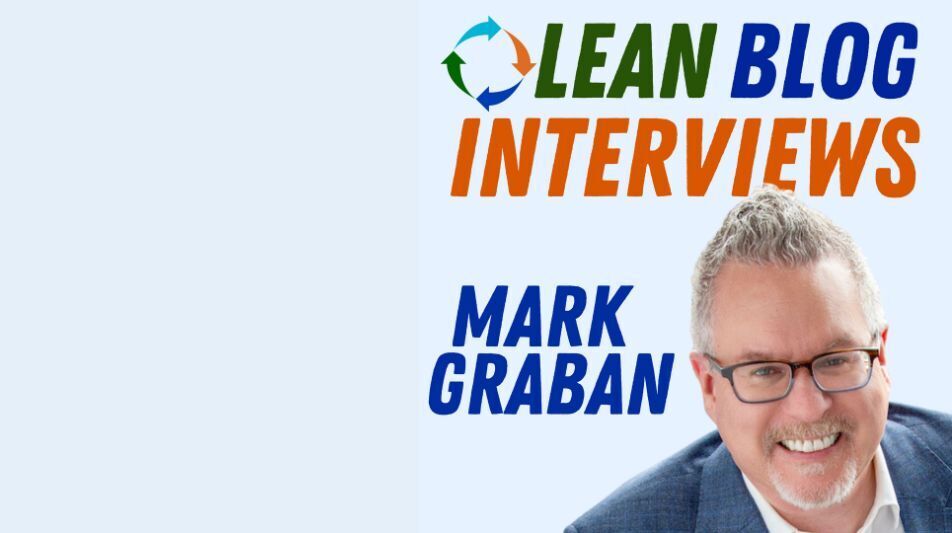
About Mark Graban
Mark Graban is an author, speaker, and consultant, whose latest book, The Mistakes That Make Us: Cultivating a Culture of Learning and Innovation, is available now.
He is also the author of the award-winning book Lean Hospitals: Improving Quality, Patient Safety, and Employee Engagement and others, including Measures of Success: React Less, Lead Better, Improve More.
He serves as a consultant through his company, Constancy, Inc, and is also a Senior Advisor for the technology company KaiNexus.
Mark hosts podcasts, including “Lean Blog Interviews” and “My Favorite Mistake.”
Education: B.S. in Industrial Engineering from Northwestern University; M.S. in Mechanical Engineering, and M.B.A. from the Massachusetts Institute of Technology’s Leaders for Global Operations Program.